
 English
  Español
  Deutsch
Introduction of Leatherette Pet Collars Briefly introduce leatherette pet collars and their growing popularity. Leatherette pet collars have emerged as a dominant force in the pet ...
Read More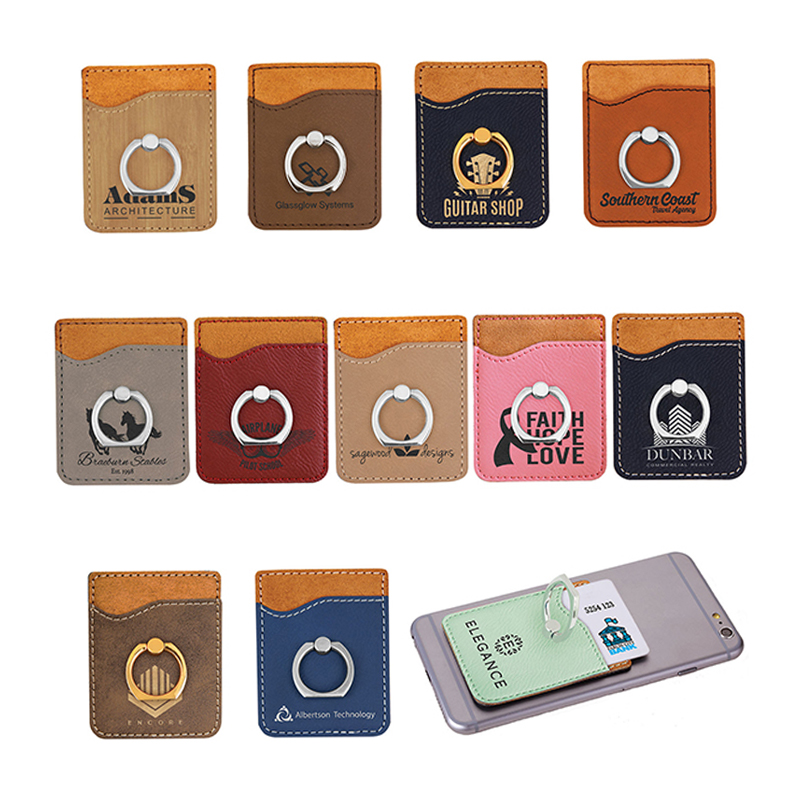
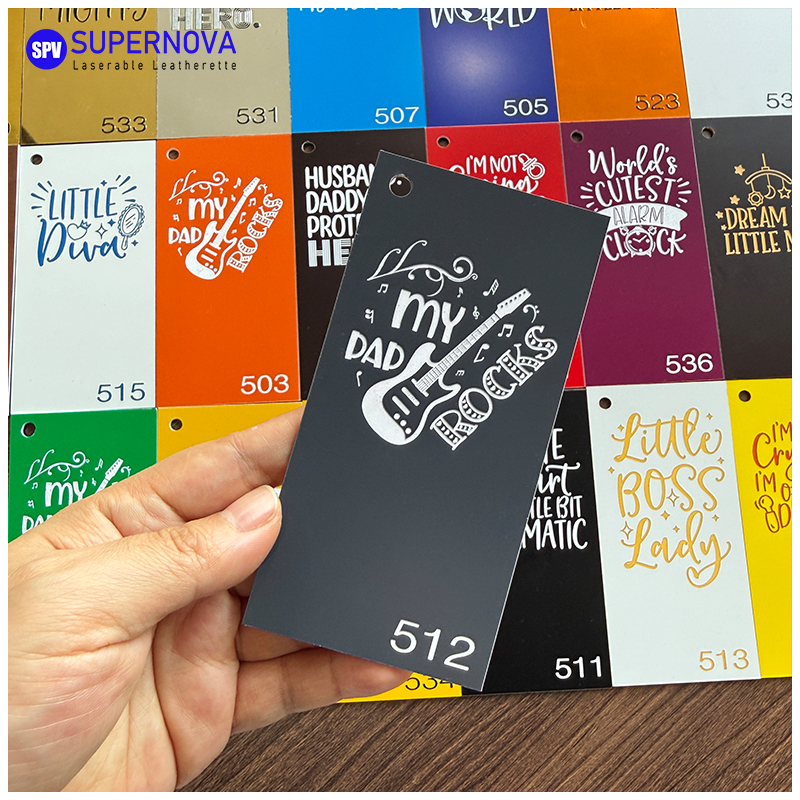
Laserable Leatherette Wholesale: A Buyer's Guide to Sheets, Patches, and Blanks
2026-10-09Laserable Leatherette Wholesale: What to Verify Before the First Bulk Order
Texture swatches are the easy part. Thickness tolerance, backing adhesive and colour repeatability decide whether your tenth shipment still matches your first.
If you are buying laserable leatherette wholesale, the specification that decides whether the material works on your machine is rarely the colour name. It is the combination of substrate thickness, surface finish, backing adhesive and lot-to-lot colour tolerance. Buyers who settle those four points before the first container get steady engraving contrast for months. Buyers who order from a swatch alone usually re-cut their test pieces when the second delivery lands.
None of this needs a laboratory. It needs the right questions asked before the purchase order goes out.
What You Are Actually Buying
Laserable leatherette is neither leather nor ordinary vinyl. It is a coated substrate, usually PU or PVC over a fabric or paper backing, with a top surface designed to react to laser energy in a controlled way. A CO2 laser removes or foams that top layer and exposes a lighter core, and that exposed core is where the contrast of the finished mark comes from. A top film that is too thin gives a faint mark; an uneven one gives a mark that fades across the sheet.
The chemistry differs from sublimation leatherette, where the surface accepts disperse dye under heat and pressure instead of being burned away. A blank can be excellent at one process and useless at the other, so shops running both should keep two material families and two sets of test records.
Beyond that, the wholesale choice is about granularity: sheet stock you cut yourself, pre-cut patches with finished edges, or semi-finished blanks that only need engraving.
Four Specifications That Decide Whether the Engraving Looks Right
Surface finish
Matte and vintage finishes give the widest, most forgiving contrast and are the safe default for volume work. Metallic, holographic and glossy surfaces still mark, but visible contrast depends on how thick the reflective top film is; our note on how surface finish affects engraving covers the practical differences.
Thickness and tolerance
1.8mm is a common sheet gauge and holds its shape well for coasters, covers and wallet panels, while thinner stock wraps and folds more easily. In production the tolerance matters more than the nominal figure: if one edge of a sheet arrives at 1.7mm and the other at 1.9mm, your focus setting drifts across the bed and the engraving depth drifts with it.
Adhesive or no adhesive
Adhesive-backed sheets remove a gluing step, which is why they suit patches and packaging inserts. The adhesive also softens under laser heat, so cut edges stay slightly tacky and engraving close to the liner can lift the paper. If you are unsure, order both and run identical artwork on each.
Colour tolerance between lots
Ask how dye lots are managed on repeat orders and request a physical retention sample from each production run. That sample is the only reliable way to prove lot six still matches lot one after months in storage.
Texture Families and the Products They Suit
Texture changes how a mark reads. Fine grains scatter the beam and soften small detail, deep grains strengthen shadows, and directional grains interact with artwork orientation.
| Texture family | Engraving character | Typical end products |
|---|---|---|
| Smooth faux leather | Even, high contrast; most forgiving | Journals, wallets, coasters, packaging |
| Lychee | Fine pebble grain; small text loses crispness | Keychains, card holders, small accessories |
| Heritage leather | Deep grain, strong shadow lines | Book covers, premium gifts |
| Matte vintage | Low sheen, wide contrast band | Name badges, portfolios, binders |
| Crocodile emboss | Large scale; suits bold artwork | Gift boxes, statement accessories |
| Metallic and holographic | Marks visibly; contrast tracks film thickness | Event items, retail display pieces |
| Denim and Canvas Pro | Fabric-like, matte, minimal glare | Totes, tags, outdoor-themed lines |
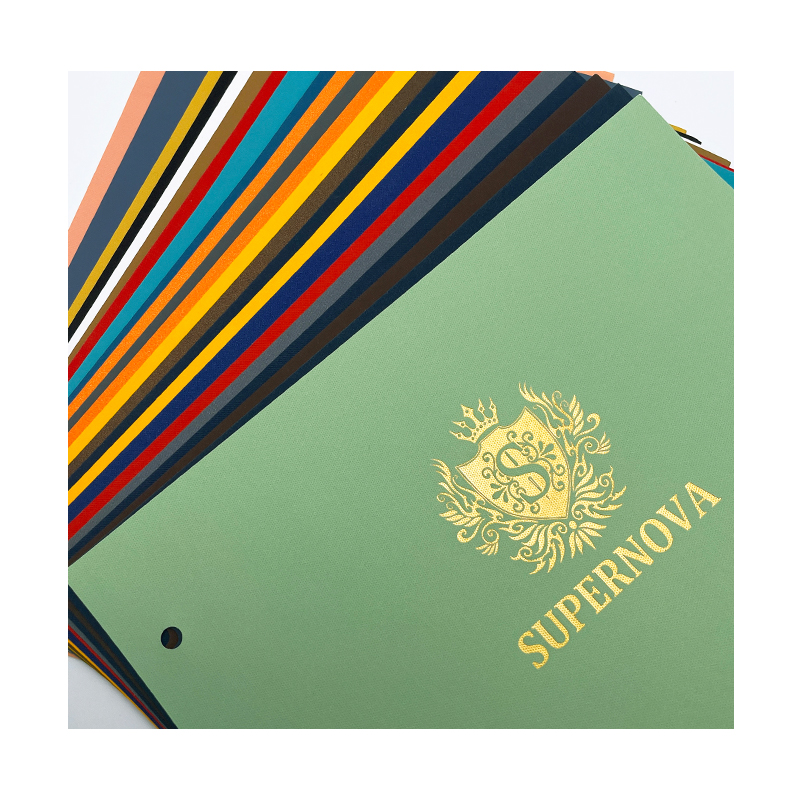
Because a texture name does not guarantee a colour match, compare finishes against a physical palette before specifying. The leatherette colour chart is organised by texture family for that reason.
Sheets, Patches or Semi-Finished Blanks
Sheet stock offers the lowest cost per square centimetre and total design freedom, but every piece has to be measured, cut, edged and positioned by hand. At high labour rates, that is where the margin disappears.
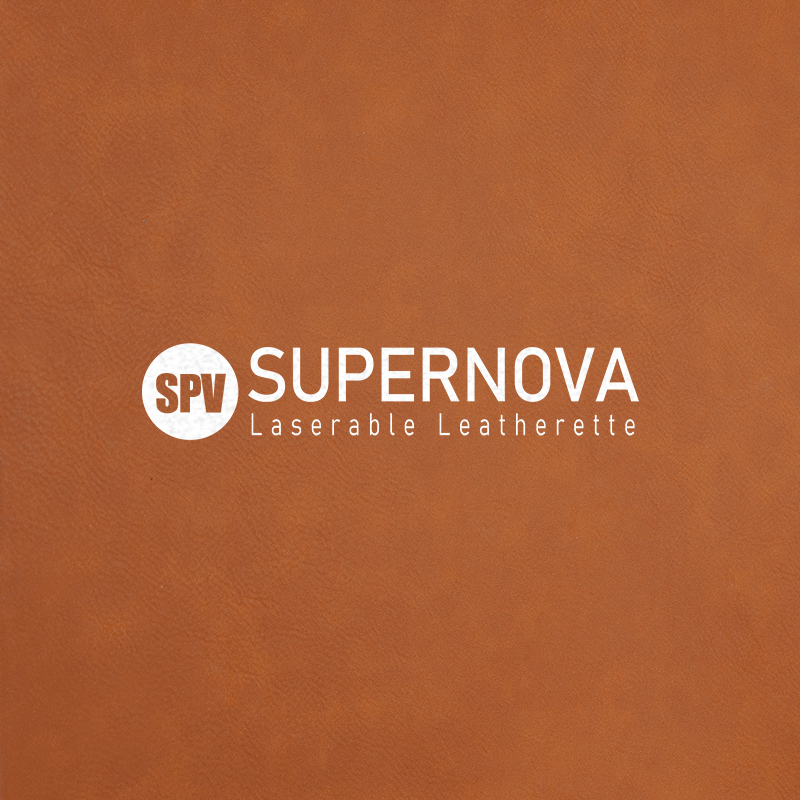 Laserable Leatherette Sheet Stock for Custom EngravingPremium faux leather sheets in multiple sizes, thicknesses, and backing options, suited to CO2 laser engraving, cutting, and prototyping when design freedom matters.View Product →
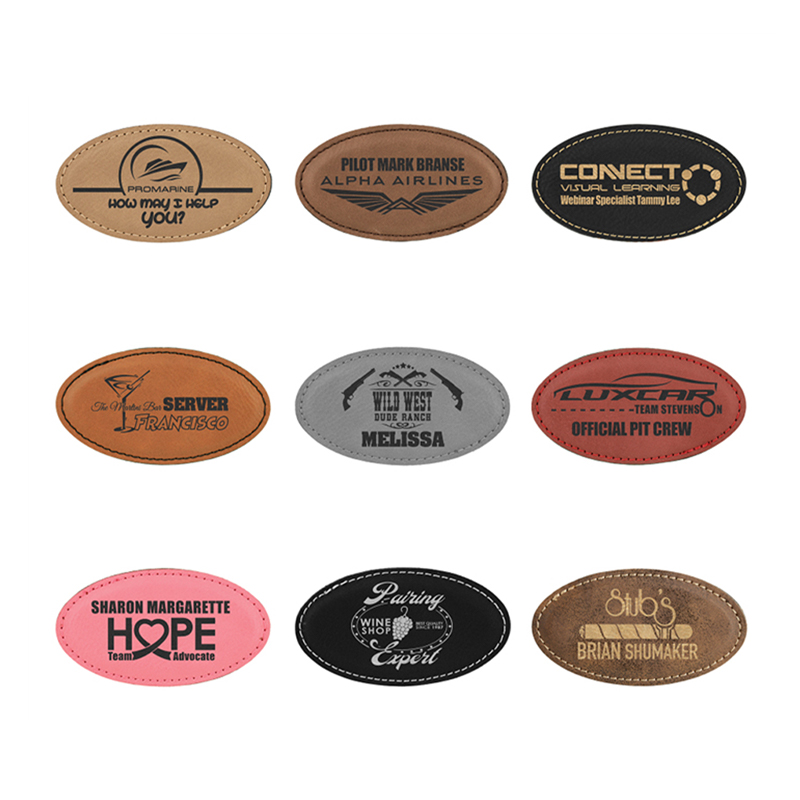
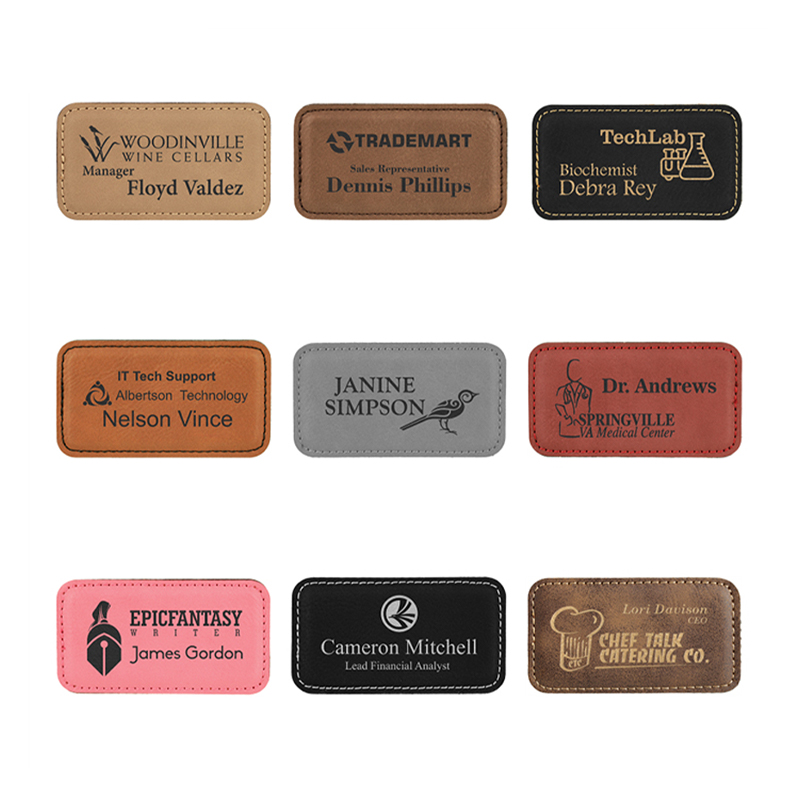
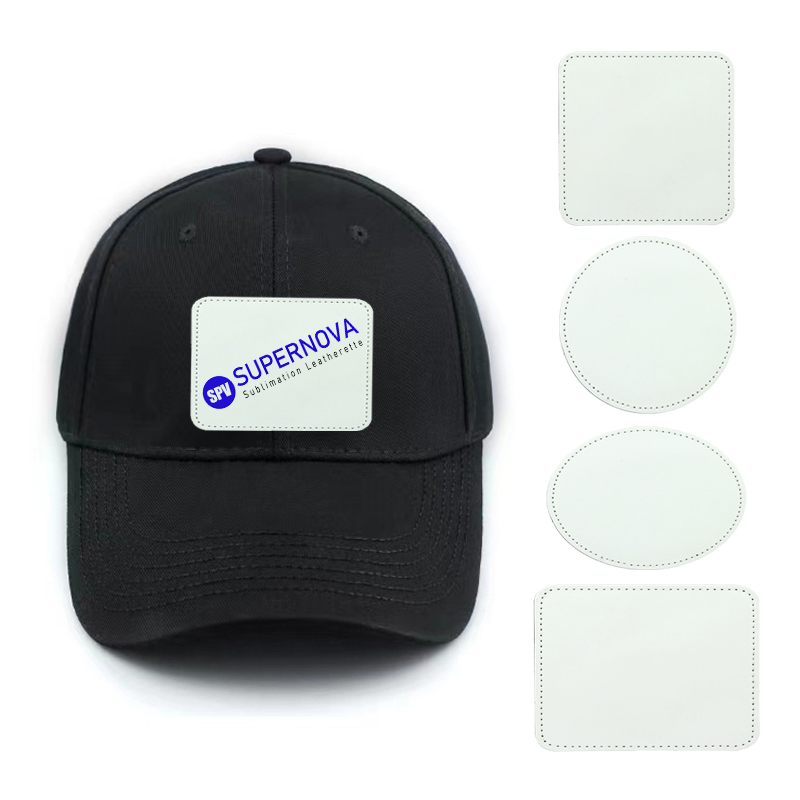
Pre-cut patches reverse the equation. Standard formats arrive ready to engrave:
- Shapes: round, square, hexagon, oval and rectangle
- Sizes: 2-1/2 inch, 3 inch, 3-1/2 x 2-1/2 inch, 3 x 2 inch and 3 x 3 inch
- Options: pressure-sensitive adhesive, merrow edge, or neither
The unit price is higher, the cost per finished piece is often lower, and edge consistency is better because every patch leaves the same die.
 Rectangle Laserable Leatherette Merrow Patch with AdhesiveSelf-adhesive faux leather patch with merrowed edges for no-sew laser engraving of logos, suitable for garments, hats, bags, uniforms, and promotional gifts.View Product →
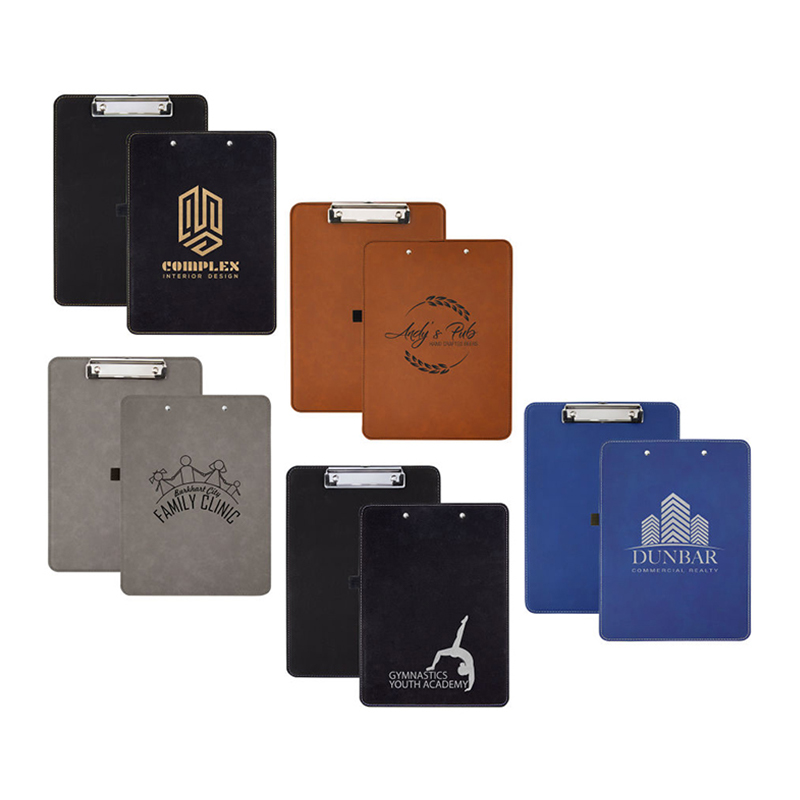
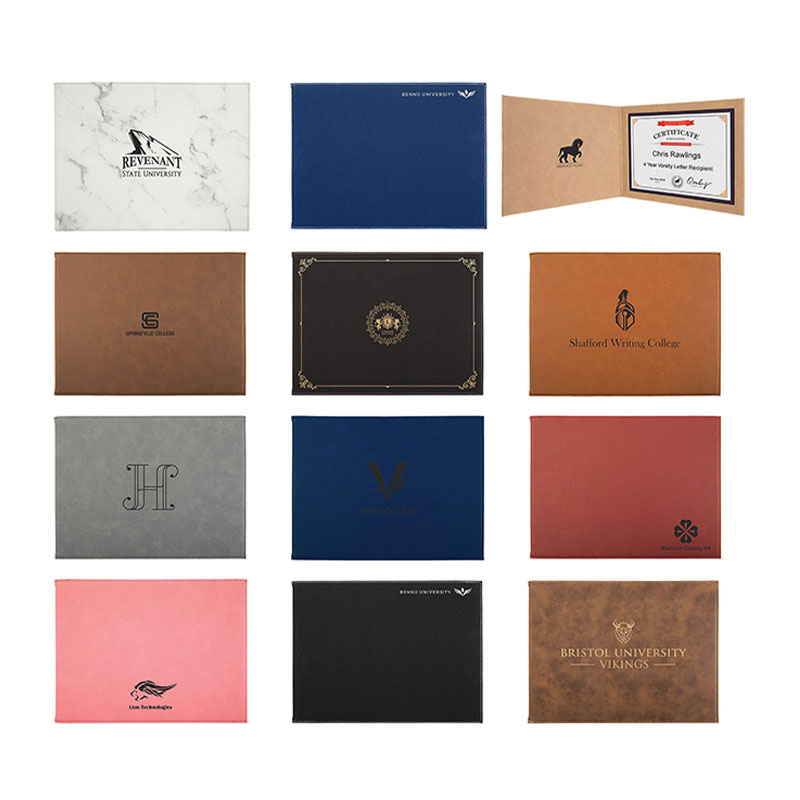
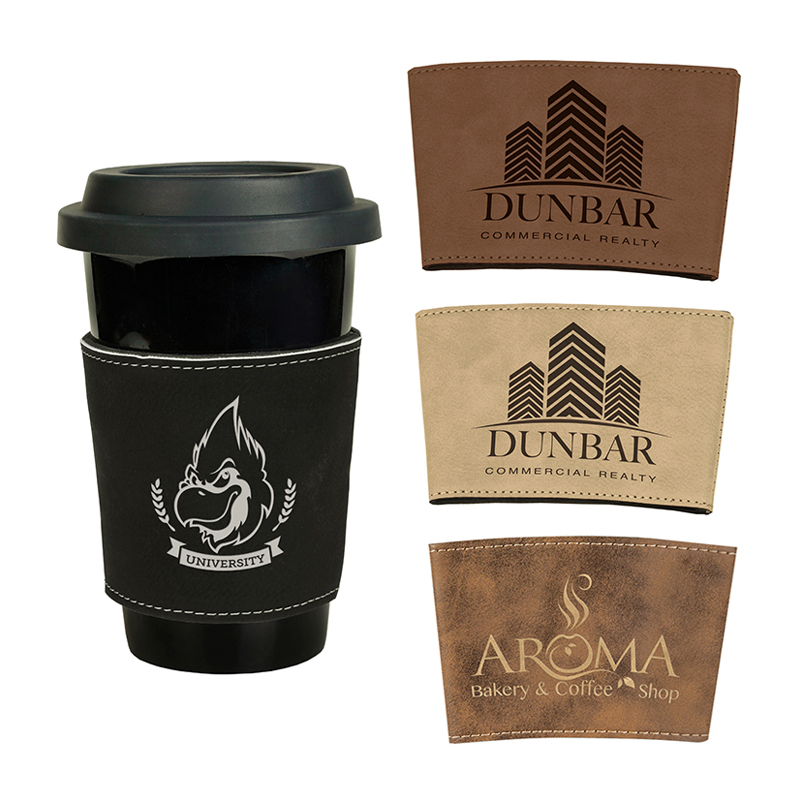
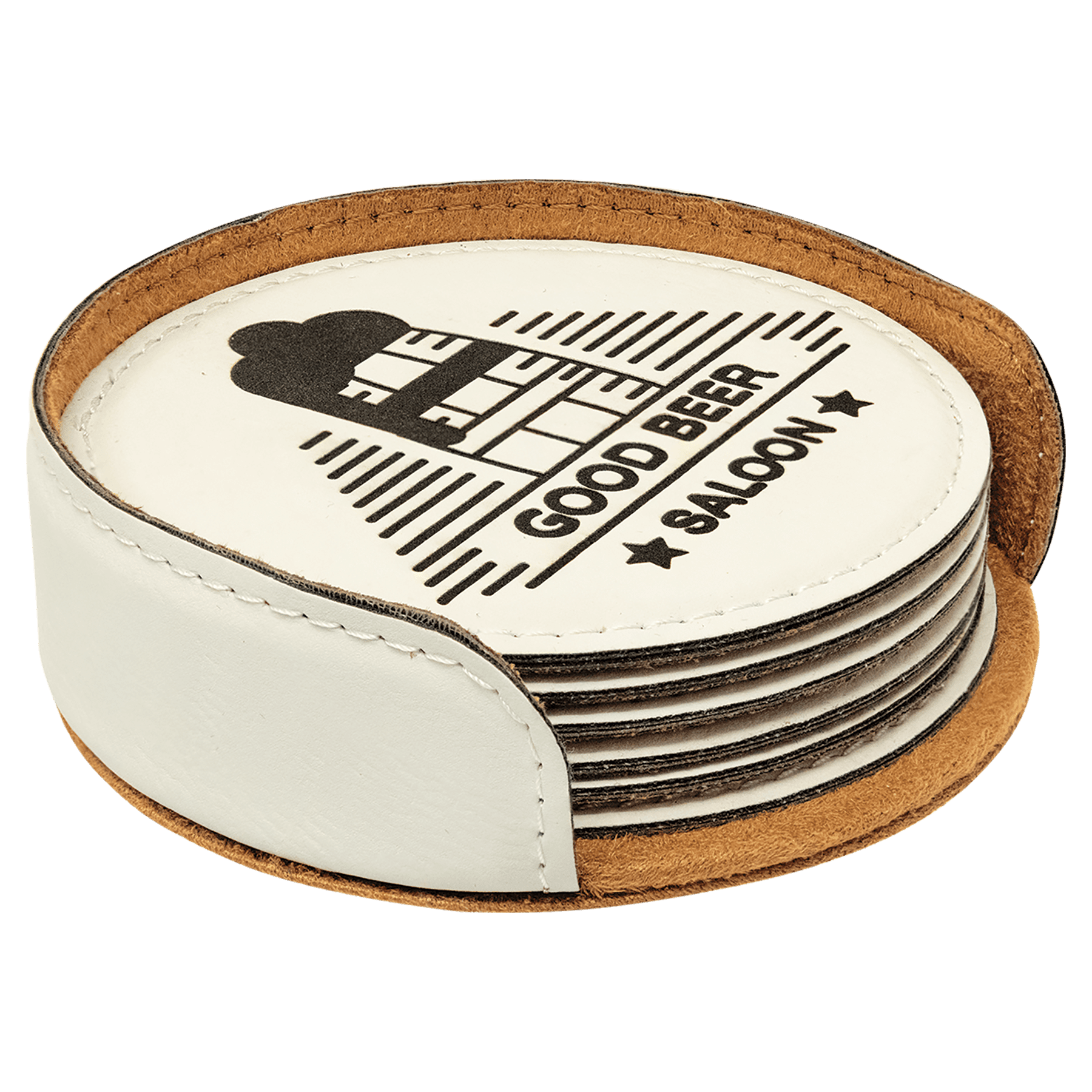
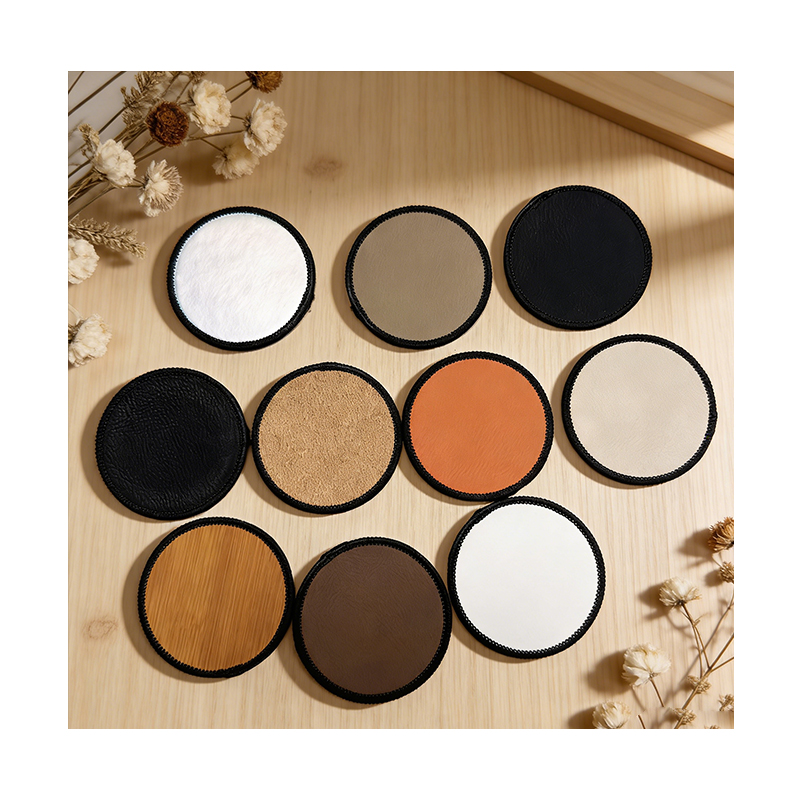
Semi-finished blanks sit at the far end of that scale: book and bible covers, coasters, journals, portfolios, wallets, luggage tags, name badges and pet collars. You buy the assembly and add personalisation, which suits promotional distributors and shops selling a finished object rather than a raw material.
Colour Consistency Is a Production Problem
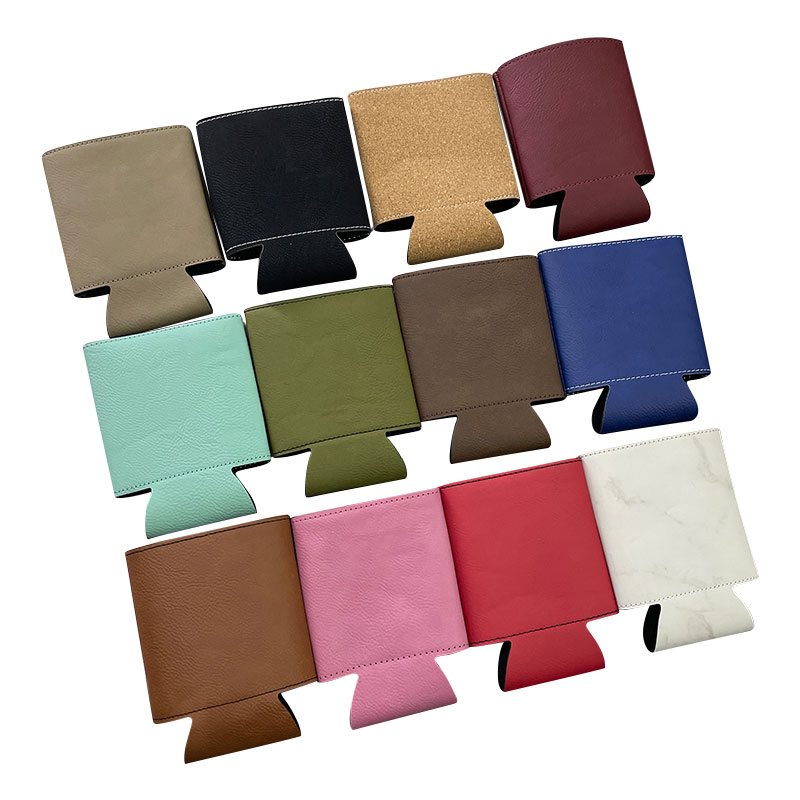
Choosing a colour is a design decision. Reproducing it in month six is a production decision, and it depends on dye-lot control and on whether the same base film and embossing roller stay in service. Two habits reduce the risk: request a physical retention sample from every lot, and check how a colour behaves when the finish changes, because the same nominal tone in matte vintage and in glossy will not read identically after engraving.
Rule of thumb: a solid colour should read the same under daylight and under neutral shop lighting. If it shifts noticeably between the two, that batch is not the one you approved.
A colour that cannot be repeated is a colour you cannot sell twice.
Trial Orders, Minimums and the Cost of Getting It Wrong
A trial order is a process qualification, not a discount negotiation. If the sample arrives in a different thickness, finish or adhesive grade than your production specification, the trial proves nothing about the run that follows.
Confirm stock-colour and custom-colour minimums separately, along with lead times and packing method. Flat packing with edge protection matters for large-format stock that will be engraved on a bed; rolled material can take a set that shows up in the finished panel. If your range spans sheets and patches, ask whether the same colour is available in both, since mixing two colour sources inside one product line is a common and avoidable fault.
A Pre-Order Checklist
- Confirm the process: laser engraving, heat transfer or both, and test each material family separately.
- Fix the thickness and state the tolerance you will accept, not just the nominal gauge.
- Decide adhesive or non-adhesive for every item in the range, and test both if unsure.
- Order the exact texture and finish you intend to run in production.
- Request physical retention samples per lot for colour verification.
- Check whether the same colour exists in sheet, patch and semi-finished formats.
- Confirm minimum order quantities, lead times and packing method in writing.
- Engrave a small batch at your normal speed and power before releasing the full order.
Keeping one engraved reference piece from each accepted lot turns a future colour dispute into a two-minute comparison instead of a re-shipment.
Where the Supply Side Matters
Supernova Blanks has supplied customised leather products since 2009, moved to its own manufacturing facility in 2012, developed laserable leatherette blanks in 2016 and extended the range to laserable acrylic sheets in 2024. The production team numbers more than 300 people and the product mix ships to over 30 countries, which matters when a reorder has to arrive in the same colour as the original run.
The catalogue covers both process families: a laserable line built on leatherette, paper and acrylic, and a sublimation line covering patches, covers, coasters, drinkware accessories, wallets, passport and luggage pieces, office items and pet products. Sheet stock, patches and semi-finished blanks share one colour system, so a single colour decision can flow across a whole range.
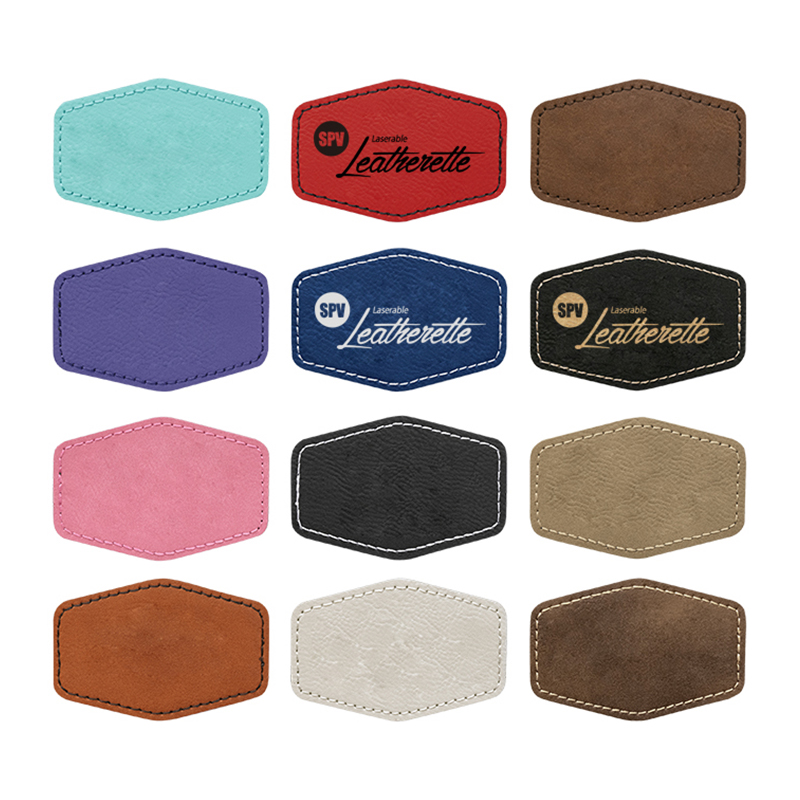 Laserable Leatherette Blanks and Materials CatalogRange of laser-engraving-ready leatherette patches, sheet stock, semi-finished blanks, and related sublimation materials sharing a colour system for coordinated product lines.View Product →
Laserable leatherette wholesale rewards buyers who specify like producers. Decide the process first, then thickness and tolerance, then adhesive, then texture, and only then colour. Order a trial in the exact specification you intend to run, keep a reference piece from every accepted lot, and treat the colour chart as an inventory document rather than a lookbook. Done in that order, the material stops being a variable in your line and becomes a predictable input.
PREV: Laser Engraved Leather Patches: How to Choose Blanks That Engrave Cleanly
NEXT: Laser Engraving Leather Patches: A Buyer's Guide to Blanks That Engrave Clean
Contact Us
Your email address will not be published. Required field are marked*
Blog
-
-
Why Choose Laser Engraved Leather Patches for High-Quality Custom Designs? When it comes to custom designs for fashion, branding, and accessories, the materials you choose play a c...
Read More -
Introduction to Laserable Leatherette What Is Laserable Leatherette? Laserable leatherette refers to a type of leatherette material engineered to respond well to laser processing, ...
Read More -
Unveiling the World of Leatherette Coasters: Beyond Basic Tableware Defining the Coaster: An Essential Home Accessory Before delving into the unique advantages of Leatherette Coast...
Read More

-
86-15851089634

-
[email protected]

-
Room 3110, Building 6, Jinrongcheng,5 Shiji Avenue, Yandu District,Yancheng City, Jiangsu Province, China

-
109#, Team 1, Longnian, Nanyang, Tinghu, Yancheng, Jiangsu, China, Zip code: 224000
- QUICK LINKS

