 English
  Español
  Deutsch
Materials & Fabrication — Engraving Guide
Laserable Leatherette vs. Genuine Leather
A close look at how each material behaves under the beam — and why detail, contrast, and consistency tell two very different stories.
Laserable Leatherette produces sharper engraving detail and far more consistent results than genuine leather. The reason is structural: leatherette is manufactured with a uniform coating and fiber base, while leather is a natural hide shaped by biology, not tolerance sheets. When a laser meets genuine leather, it must contend with variable thickness, natural oils, scarring, and inconsistent density across the surface. Leatherette removes nearly all of these variables, giving fabricators predictable burn depth, cleaner line work, and repeatable contrast from one piece to the next.
For operations producing hundreds or thousands of identical engraved items — name badges, drinkware sleeves, journal covers, promotional gifts — that consistency tends to outweigh the organic texture leather offers. Genuine leather still holds its place where uniqueness and tactile richness matter more than uniformity. What follows is a practical, side-by-side breakdown.
Why Engraving Detail Diverges
The core difference in how leather and leatherette respond to a laser comes down to surface uniformity. Genuine leather's density, grain, and moisture content vary not only from hide to hide, but across different regions of a single hide — producing engraving that reads darker or deeper in some spots than others, even with unchanged laser settings.
Laserable Leatherette is typically built from a fabric or fiber base bonded with a polyurethane coating. That coating vaporizes cleanly at the surface, exposing a contrasting layer beneath — the mechanism behind the crisp, high-contrast marks associated with leatherette, whether finished in black, gray leatherette, or another solid tone. Genuine leather's natural grain, by contrast, can interrupt fine detail: pores, fat wrinkles, and healed scars sometimes cause uneven burns on small text below six points.
Laserable Leatherette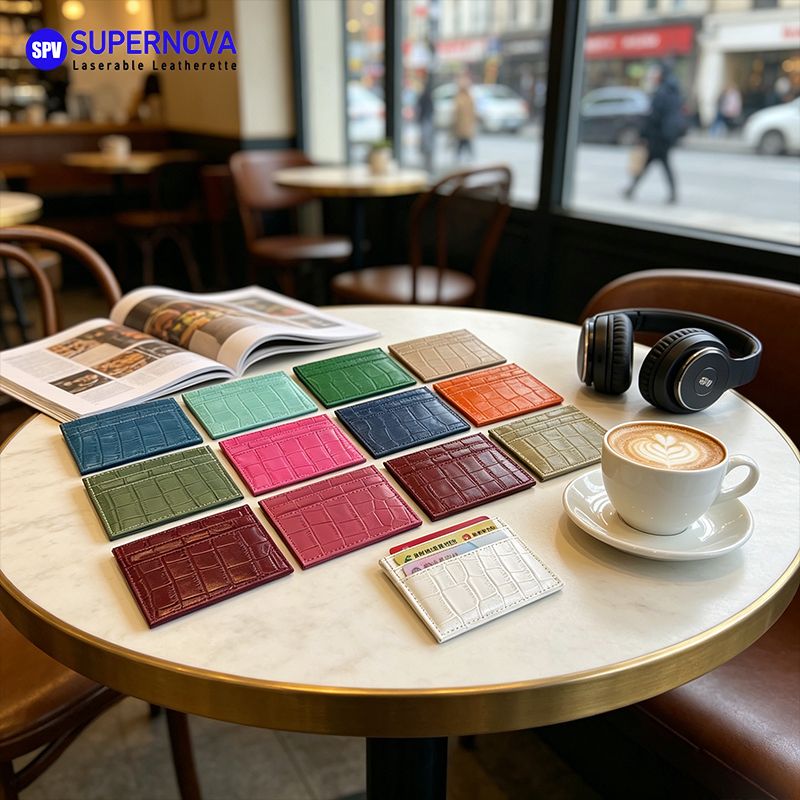
A roll of Laserable Leatherette purchased today behaves almost identically to one purchased six months from now. No hide can promise that.
Consistency Across Production Runs
For buyers producing engraved goods at scale, batch-to-batch reliability is often the deciding factor. Laserable Leatherette is manufactured to tight tolerances, while genuine leather cannot offer that guarantee — each hide comes from a different animal, shaped by its own growth conditions, diet, and age.
| Factor | Laserable Leatherette | Genuine Leather |
|---|---|---|
| Thickness Uniformity | Consistent, machine controlled | Varies across the hide |
| Engraving Contrast | High and predictable | Moderate, grain-dependent |
| Fine Detail Retention | Excellent for small text/logos | Fair, affected by texture |
| Batch Repeatability | Very high | Low to moderate |
| Odor / Smoke Output | Mild, coating-based | Stronger, protein-based |
Color Contrast and Visual Depth
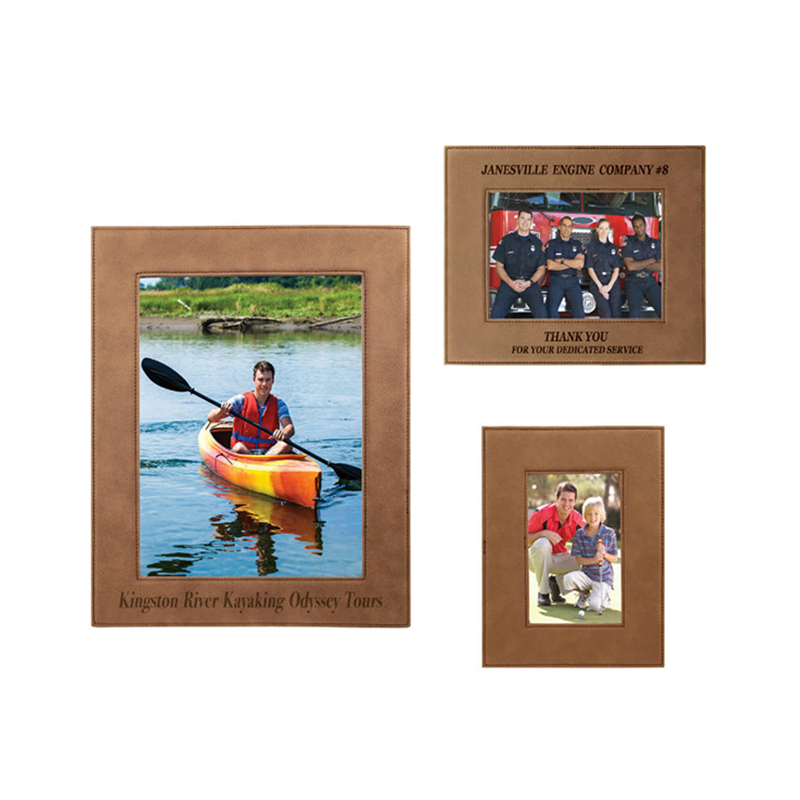
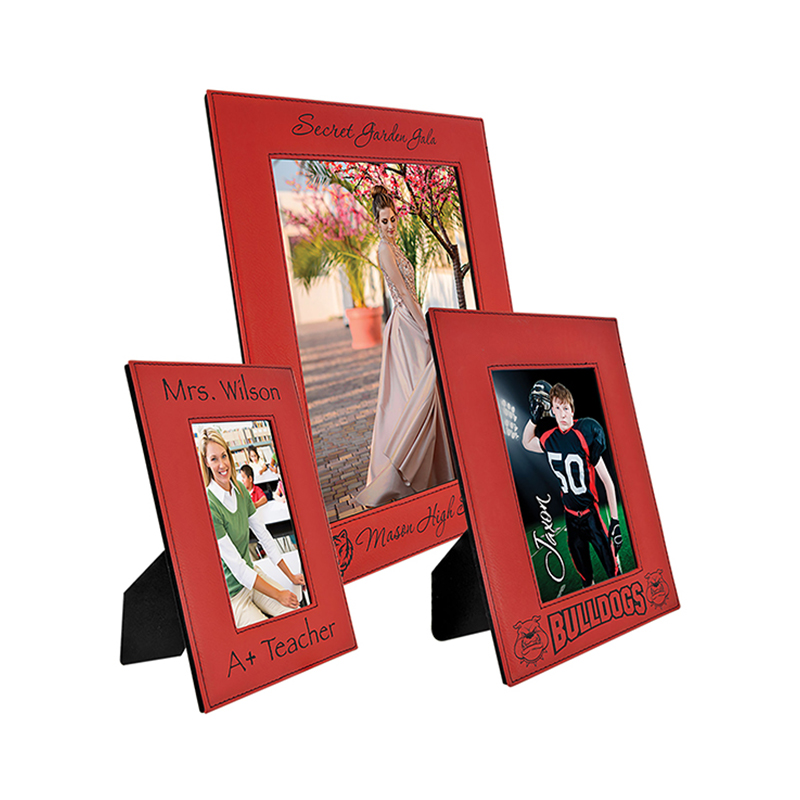
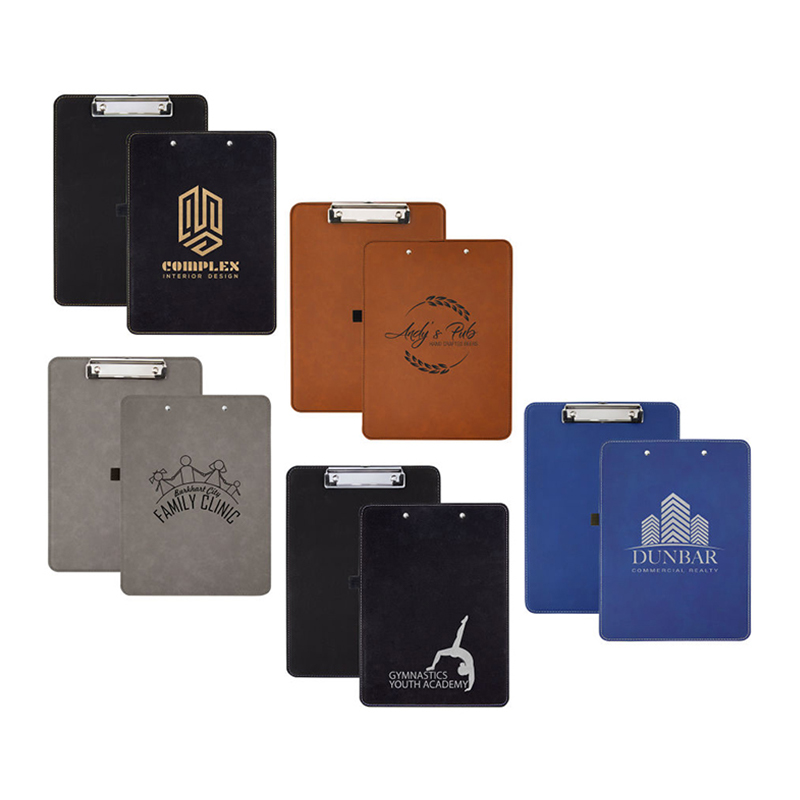
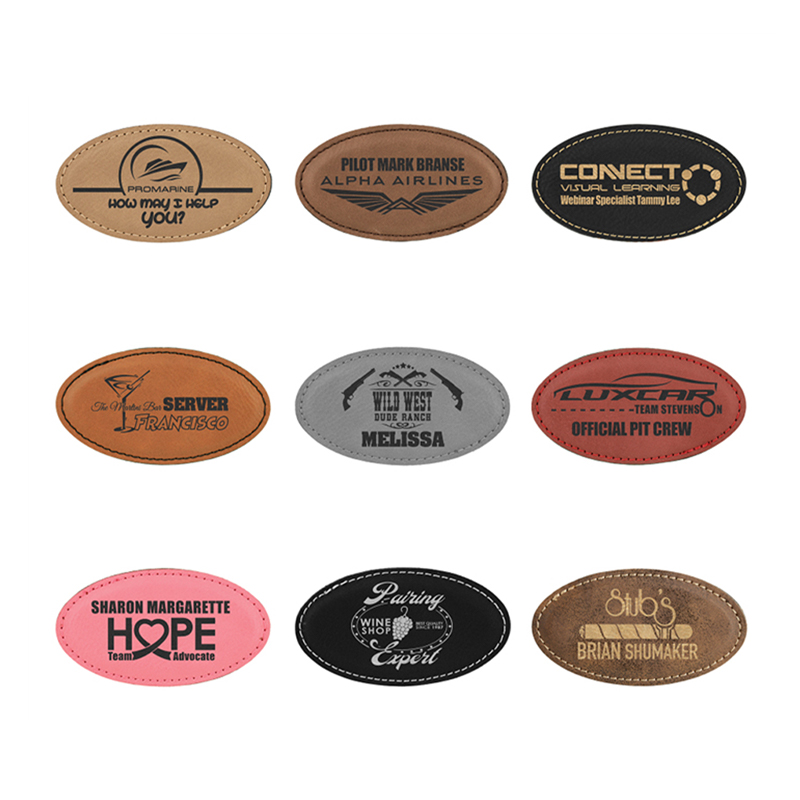
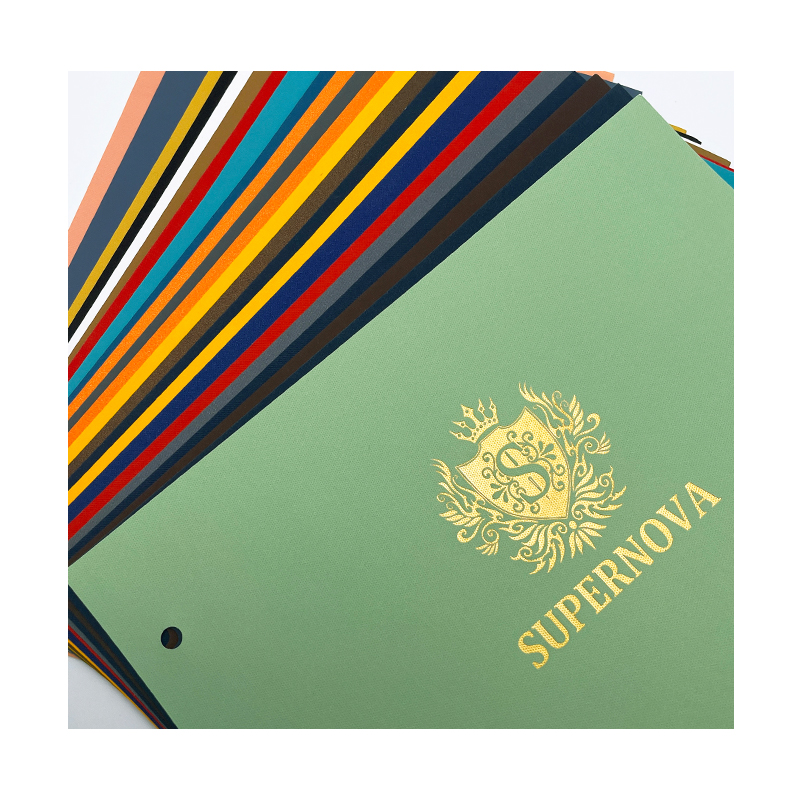
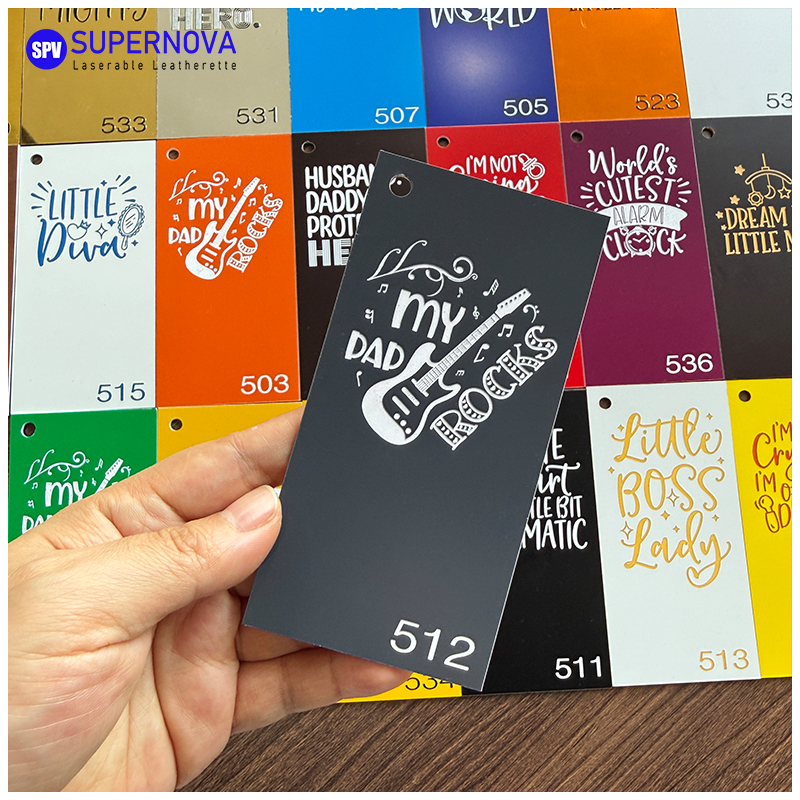
One of Laserable Leatherette's strongest traits is its ability to expose a contrasting core layer once the surface coating is removed. A dark sheet often reveals a lighter tan or cream layer beneath, creating a clean two-tone engraved effect with no extra finishing step. Gray leatherette variants are especially popular for this — the resulting mark reads neutral and crisp, equally at home on formal and casual products.
Genuine leather doesn't offer this same mechanism. The laser chars the surface instead, leaving a darker brown or black mark against the hide's natural tone — rich and organic, but without the crispness of an exposed-layer effect.
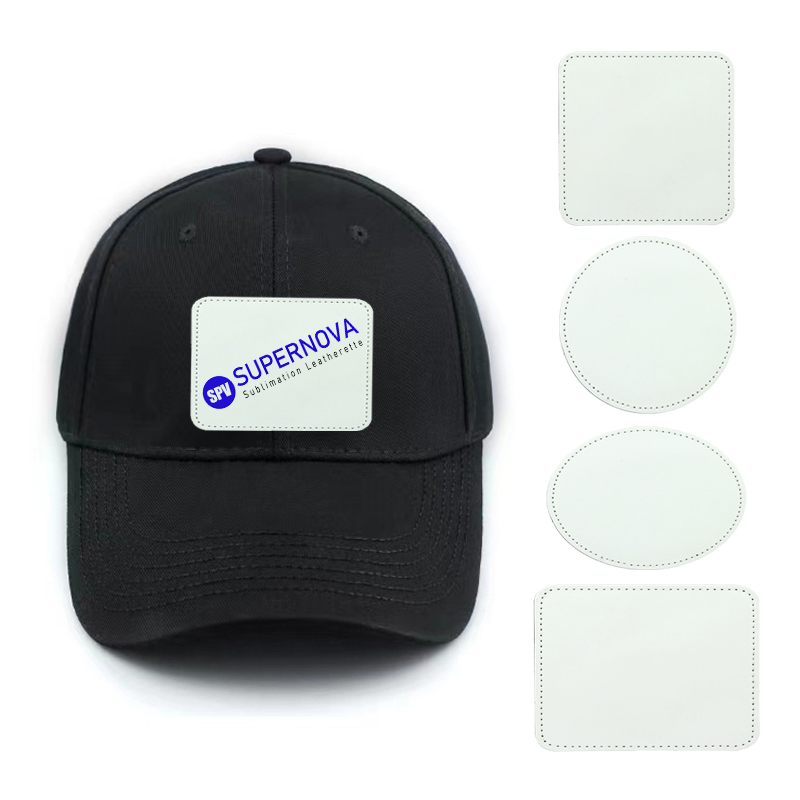
Sublimation leatherette is a related but distinct product. It shares leatherette's synthetic base but is formulated for dye-sublimation printing, not laser engraving — its coating chemistry favors ink absorption over thermal contrast.
Heat Response and Material Behavior
Leatherette's synthetic coating vaporizes at a lower, more consistent temperature than the collagen fibers in genuine leather, so operators can set laser power once and expect matching burn depth across a full run. Leather often requires fresh test settings on scrap from each new hide, since density shifts can cause over-burn or under-burn at identical settings.
Both materials smoke during engraving, but composition differs. Leatherette smoke is lighter and easier to extract with standard fume systems; leather smoke carries a stronger protein-based odor that can be harder to manage in enclosed spaces over long runs.
Edge Quality When Cutting and Engraving Together
Many projects call for engraving and cutting in a single pass. Laserable Leatherette generally yields cleaner, self-sealing edges — its coated surface melts slightly along the cut line, resisting fray. Genuine leather can fray or curl at cut edges, particularly on thinner hides, sometimes requiring burnishing or sealant afterward.
- Laserable Leatherette: clean, self-sealing edges with minimal post-processing
- Genuine leather: may require burnishing or edge paint after cutting
- Both materials benefit from proper airflow settings to reduce edge charring
Cost and Sourcing
Genuine leather is almost always more expensive than Laserable Leatherette, both in raw material cost and in the labor needed to sort and grade hides for consistent engraving. Laserable Leatherette typically costs a fraction of leather per square foot, and its uniform sheets mean minimal waste from irregular hide shapes. Across thousands of units, that gap compounds fast.
Sourcing is simpler too — suppliers can guarantee consistent color batches, including gray leatherette, black, and brown, without the natural variation inherent to animal hides.
Choosing the Right Material
- Choose Laserable Leatherette for high-volume production, sharp text and logo detail, predictable contrast, and lower material cost.
- Choose genuine leather for one-off premium items where natural texture and organic variation are the appeal.
- Choose sublimation leatherette when the decoration method is dye-sublimation printing rather than laser engraving.
Using sublimation-grade leatherette for laser engraving projects — its coating won't produce the crisp contrast that laser-grade sheets deliver, and results are often inconsistent.
In Summary
In most commercial engraving applications — awards, name tags, journal covers, coasters, branded accessories — Laserable Leatherette delivers the sharper, more consistent result that buyers expect, while genuine leather remains reserved for premium, low-volume goods where natural imperfection is treated as a feature rather than a flaw.