
 English
  Español
  Deutsch
Introduction of Leatherette Pet Collars Briefly introduce leatherette pet collars and their growing popularity. Leatherette pet collars have emerged as a dominant force in the pet ...
Read More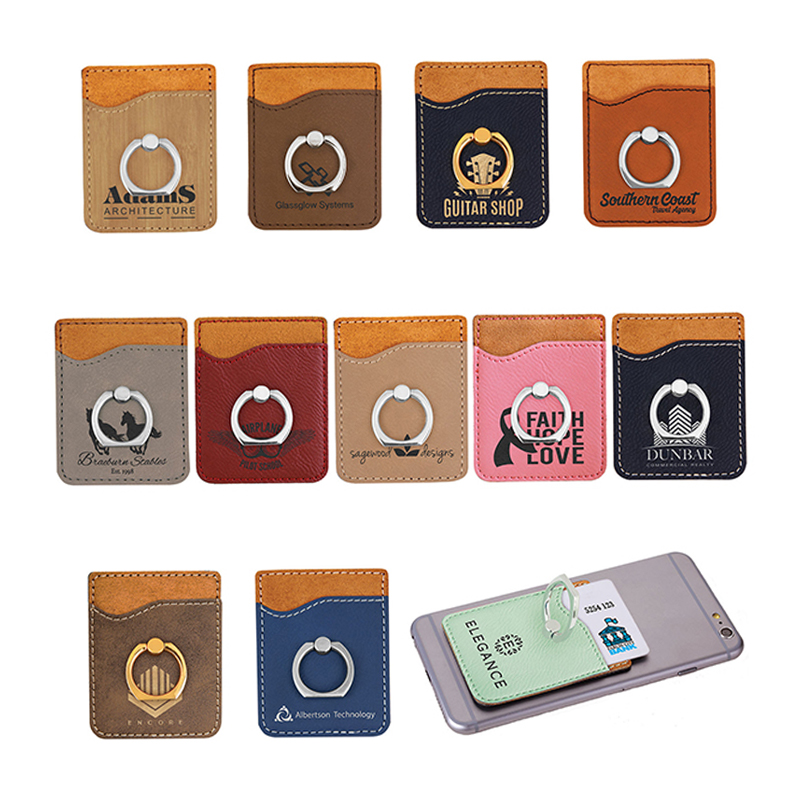
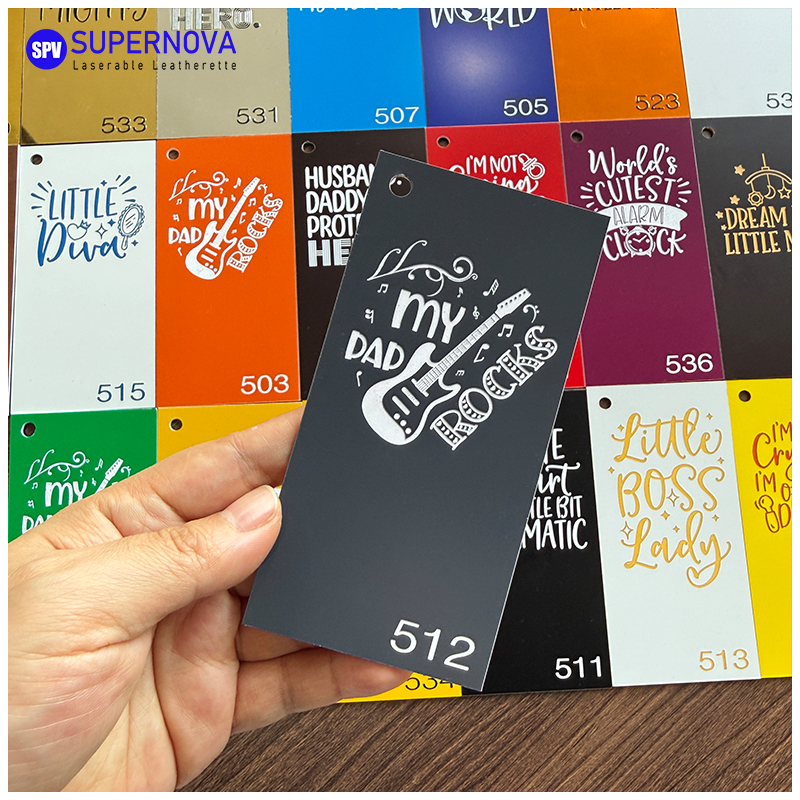
Can Faux Leather Be Laser Engraved? Yes, If You Choose the Right Material
2026-09-15Material Guide for Laser Professionals
Can Faux Leather Be Laser Engraved? Yes, When You Choose the Right Material
A practical look at why ordinary faux leather fails in the laser bed, what makes laserable leatherette different, and how to select the right blanks for your engraving business.
A customer asks for a set of personalized coasters, and you pull out the faux leather sheets you bought from a craft supplier. You run a quick test. The first sheet engraves dark and clean. The second, a different color from the same range, barely shows an outline. By the time you test the third, the air in the workshop smells sharp enough to make you stop the machine.
This is a familiar experience in laser workshops, and it explains why the question "Can faux leather be laser engraved?" gets so many different answers. The short answer is yes. The practical answer is more specific: faux leather engraves reliably only when it has been manufactured for laser processing. The material you need is called laserable leatherette, and it behaves very differently from decorative faux leather sold for upholstery, bags, and crafts.
The Short Answer: Yes, but Only with the Right Material
Faux leather is a broad category. It usually consists of a fabric base, such as polyester or cotton, coated with a polymer layer designed to imitate the look and feel of real leather. The coating is commonly polyurethane (PU) or, in cheaper products, polyvinyl chloride (PVC). Every manufacturer adjusts the formula differently, adding fillers, pigments, release agents, and surface finishes. The result is that two materials that both look like faux leather can react to a laser in completely different ways.
PVC-based materials are the most problematic. When heated by a laser, PVC releases hydrogen chloride gas, which is hazardous to breathe and corrosive to the laser machine's optics and metal components. Even PVC-free materials can disappoint if the polymer melts instead of vaporizing, or if the surface finish prevents the laser beam from being absorbed evenly.
The reliable choice for professional work is laserable leatherette. This term describes a man-made leather material with a specially engineered top layer that absorbs laser energy and turns it into a dark, permanent mark. The surface changes color without the polymer melting, so you get clean edges and consistent contrast on every piece.
The takeaway: yes, faux leather can be laser engraved — when the material is made to be engraved. For predictable results, start with laserable leatherette designed for this purpose.
Why Ordinary Faux Leather Behaves Unpredictably
Decorative faux leather is made to look good on furniture, clothing, and accessories. It is not made to interact with a focused laser beam. When you engrave it, you are effectively testing an unknown polymer formula at high temperature, which produces several recurring problems.
The first issue is melting. Many polymer coatings melt before they vaporize, leaving a raised, glossy line instead of a smooth matte mark. The second is uneven contrast: fillers and pigments distributed unevenly through the coating absorb laser energy differently, so some areas turn dark while others stay pale. The third is batch variation. A general craft supplier may change the raw material formula without changing the label, so the next batch can engrave completely differently from the one that worked last month.
Here are the warning signs that a faux leather product is not made for lasering:
- The engraved line looks melted, raised, or glossy instead of smooth and matte.
- The mark only appears at high power settings, where the surrounding material scorches as well.
- The engraving fades or wipes off after cleaning.
- Different colors from the same supplier produce very different results.
- The material gives off a strong chemical odor during processing.
Safety first: if you cannot confirm the composition of a material, do not laser it. PVC-based products can release hydrogen chloride gas, which is dangerous to inhale and will corrode the optics and mechanics of your machine. Use proper fume extraction, and buy only from suppliers who state that their products are laser-safe.
What Makes Laserable Leatherette Different
Laserable leatherette is built for the laser bed. The top coating contains energy-absorbing components that respond predictably to the CO2 laser wavelength used in most engraving machines. When the beam strikes the surface, the coating undergoes a controlled color change that creates a permanent dark mark — typically a rich charcoal tone — without the polymer structure melting or deforming.
This design matters for three reasons. Consistency: the same coating formulation is used across production batches, so one sheet matches the next — essential when you are producing hundreds of pieces. Detail: because the material does not melt, fine lines and small text stay sharp, making intricate logos and serial numbers possible. Durability: the mark is a change in the material itself, not a layer on top, so it will not scratch off, wipe away, or fade with normal use.
The material is typically supplied in a standard thickness of around 1.8mm, with or without adhesive backing, and it is available in dozens of colors and surface textures. Producers with genuine experience in this niche have refined their coating formulas over many production cycles — some since 2016 — to balance engraving contrast, cutting behavior, and surface feel. The laserable leatherette range available from specialized suppliers covers the most common sheet, patch, and blank formats.
What a Quality Engraving Looks Like
When you evaluate a material for laser engraving, check five things: consistency of the mark, sharpness of the edges, ability to hold fine detail, durability of the result, and how safely it processes. The comparison below shows how ordinary faux leather and laserable leatherette differ across these factors.
| Factor | Ordinary faux leather | Laserable leatherette |
|---|---|---|
| Mark consistency | Varies by color, batch, and supplier | Uniform across batches and colors |
| Edge quality | Can melt, raise, or scorch | Clean and crisp |
| Fine detail | Blurs in small text and linework | Reproduces fine lines accurately |
| Durability | Mark may fade or wipe off | Permanent surface change |
| Safety profile | Unknown composition; possible harmful fumes | Formulated for laser processing |
| Sourcing | Craft and upholstery suppliers | Laser material specialists |
Dark colors deserve special attention. Because the engraved mark is dark, it will be barely visible on a near-black surface. Most laserable leatherette colors are light or mid-tone — tan, cream, gray, olive, and similar shades — where the engraved contrast is dramatic. If a customer wants a black blank with a light effect, discuss alternatives such as sublimation printing, which can place light-colored designs onto dark blanks.
The material does the heavy lifting. A properly formulated laserable surface lets the laser simply expose the quality that is already built into the sheet.
Matching the Material to Your Workflow
Laserable leatherette comes in several product forms. The right choice depends on where you want to start in the production process: cut your own shapes, attach pre-made patches to other goods, or engrave ready-to-sell blanks.
Sheet Stock for Cutting and Custom Engraving
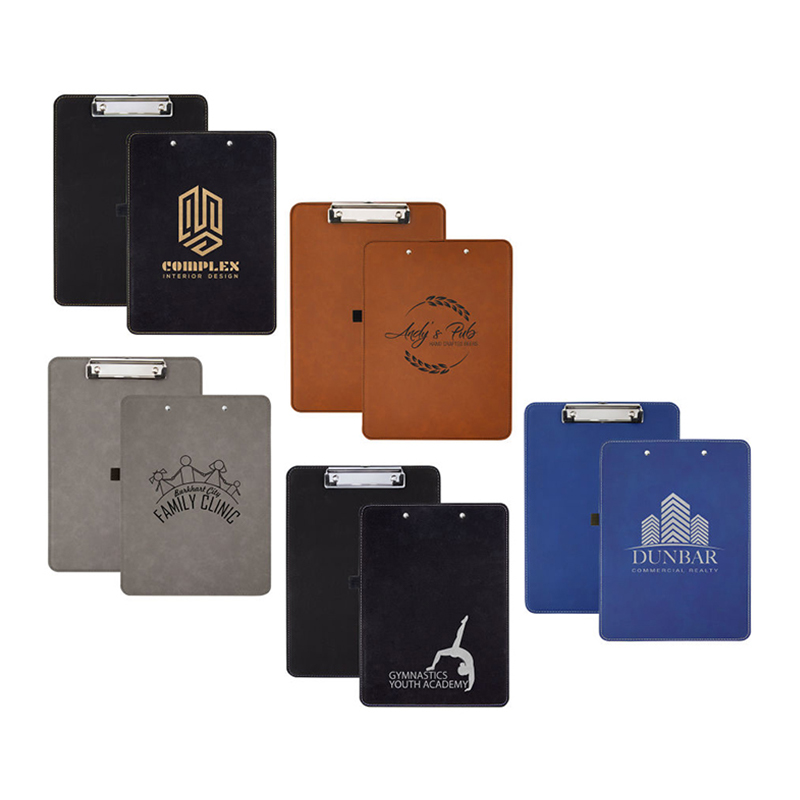
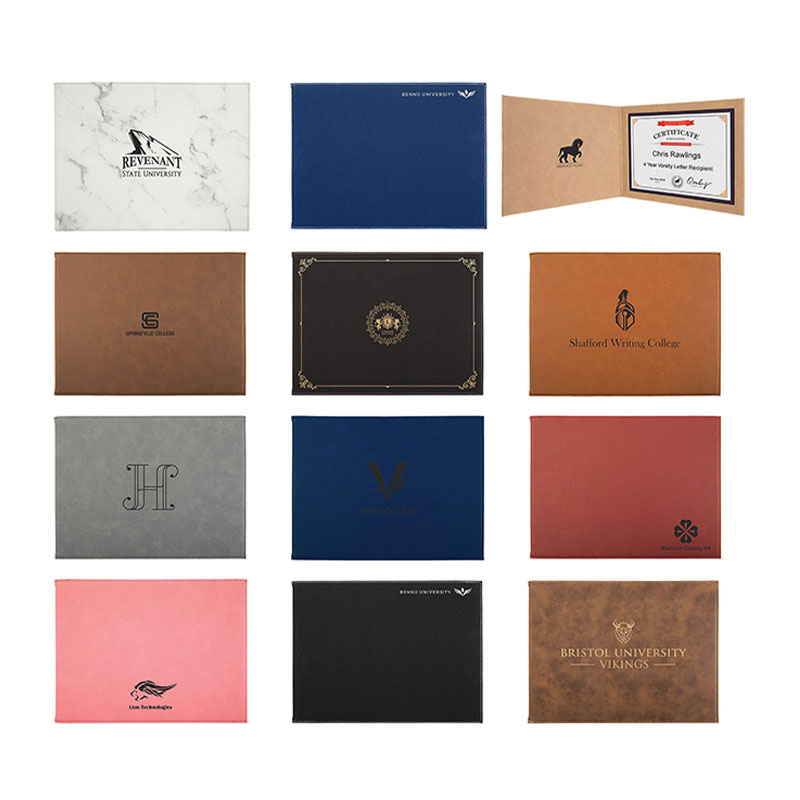
Sheet stock is the most flexible form. You cut your own shapes, engrave them, and create almost any product: keychains, tags, medallions, ornaments, presentation folders, bookmarks, and small accessories. With adhesive-backed sheets, the engraved piece can be applied directly to another surface, which works well for name badges, labels, and decorative inlays.
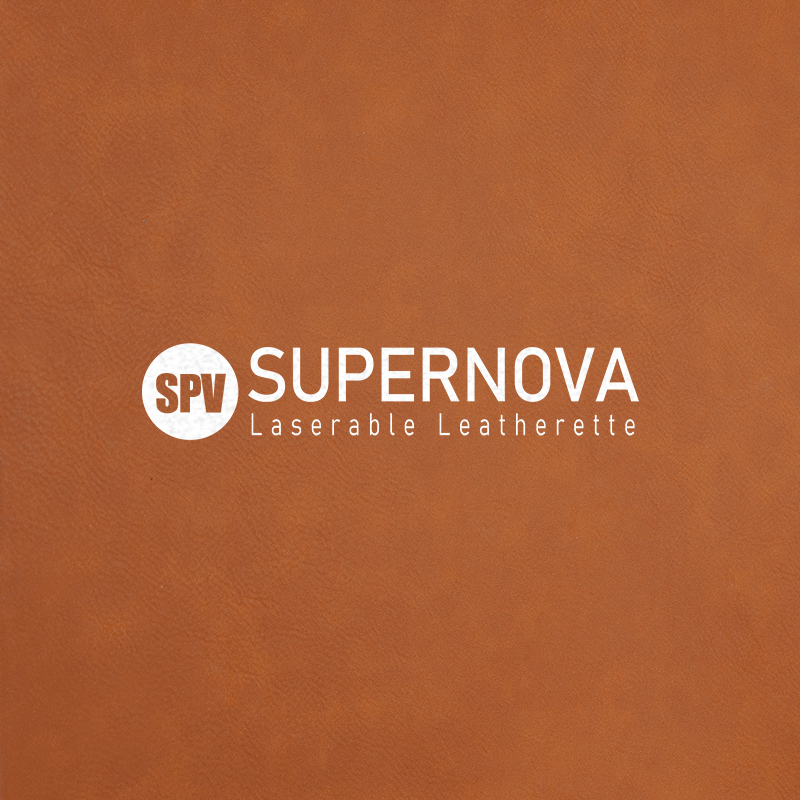 Laserable Leatherette Sheets with or without AdhesiveFlexible sheet stock for cutting and engraving your own shapes, ideal for keychains, tags, name badges, and decorative inlays. Adhesive-backed versions allow direct application to other surfaces.View Product →
Patches for Apparel and Accessories
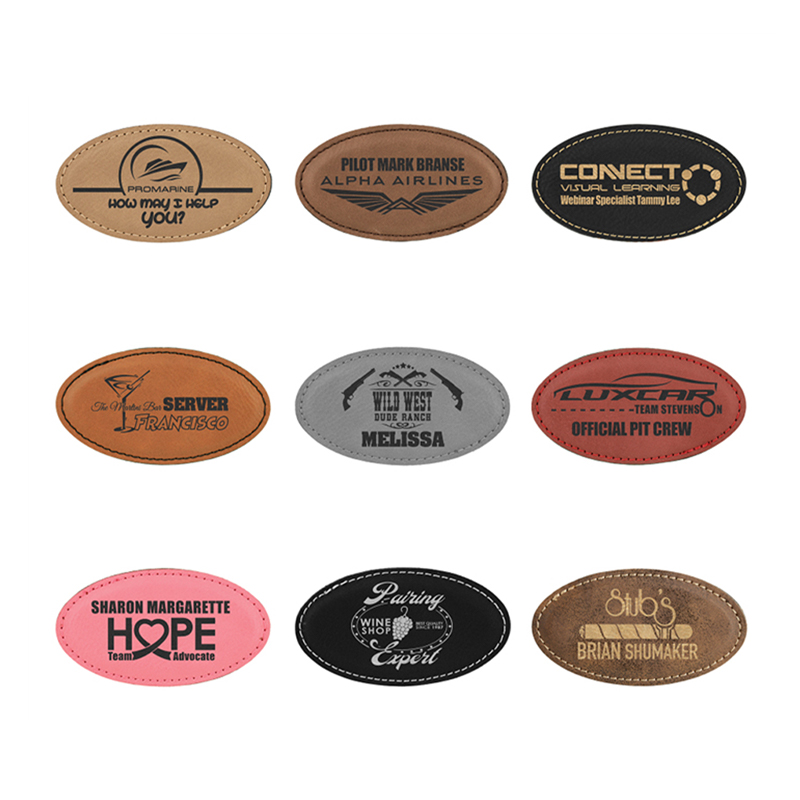
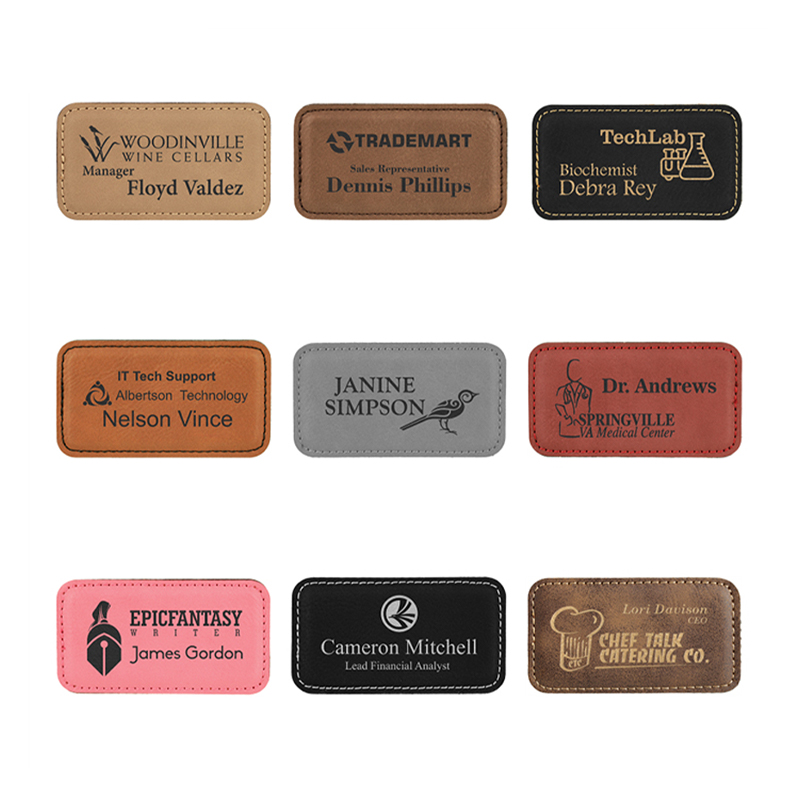
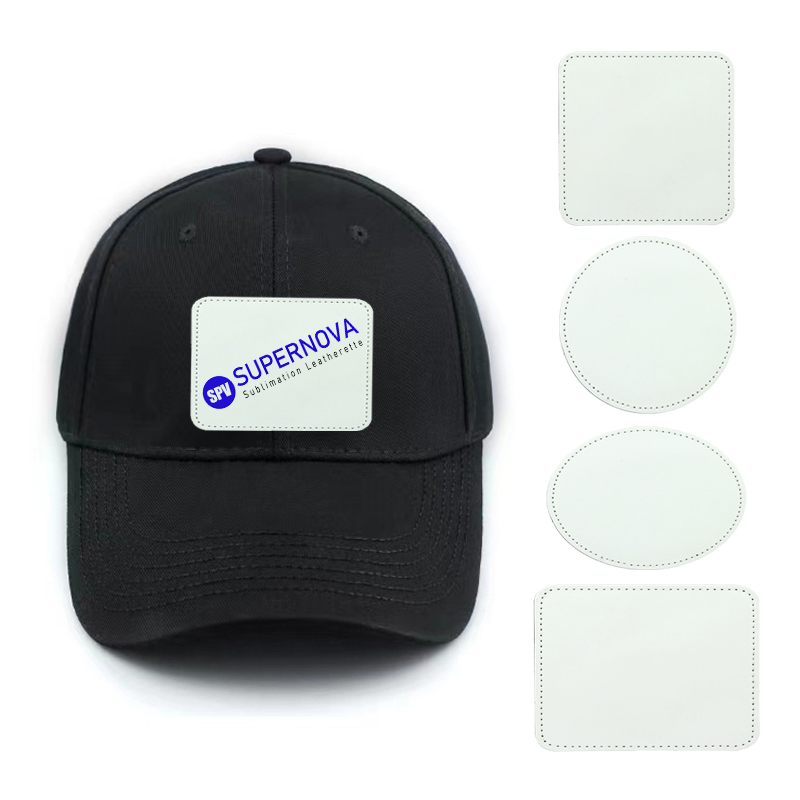
Patches arrive pre-cut with merrow or plain edges, often with an adhesive backing that makes them simple to apply. They are ideal for customers who want engraving without cutting and finishing the pieces themselves. Round, square, oval, and rectangular patches can be engraved and attached to hats, bags, jackets, aprons, and uniforms, making them a popular choice for corporate branding and events.
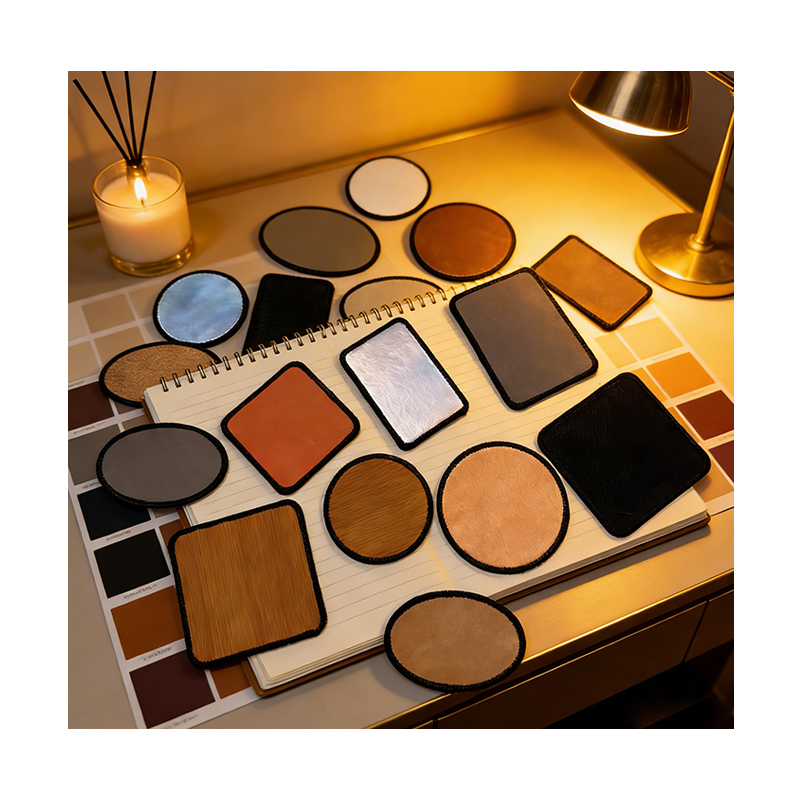 3" Round Laserable Leatherette Merrow Patch with AdhesivePre-cut round patch with merrowed edges and strong adhesive backing, ready for laser engraving. Works on hats, bags, jackets, and uniforms for custom branding and promotions without sewing.View Product →
Ready-to-Engrave Blanks for Retail Products
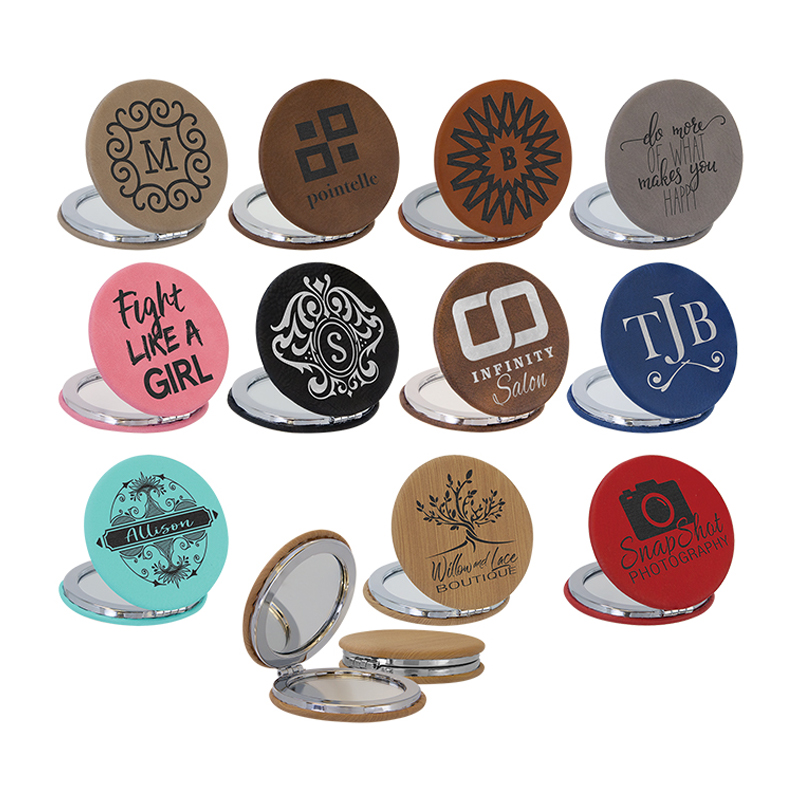
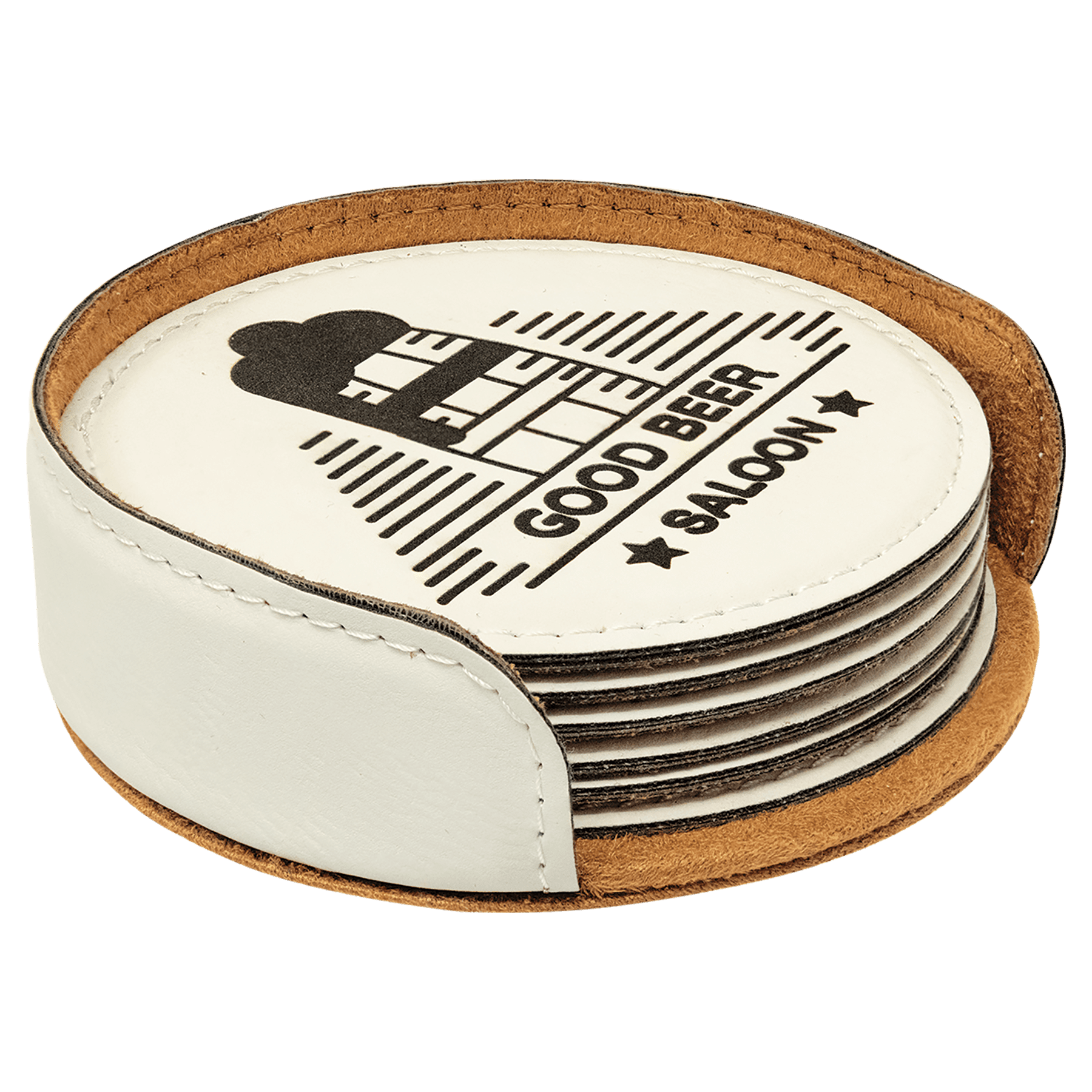
Ready-to-engrave blanks are the fastest way to add laserable leatherette to a catalog. Coasters, luggage tags, book and Bible covers, keychains, wallets, and drinkware accessories are all available as finished blanks, so you can skip cutting, edge finishing, and assembly and focus entirely on the engraving. This is an attractive option for promotional product suppliers, engraving studios, and wholesale-order businesses.
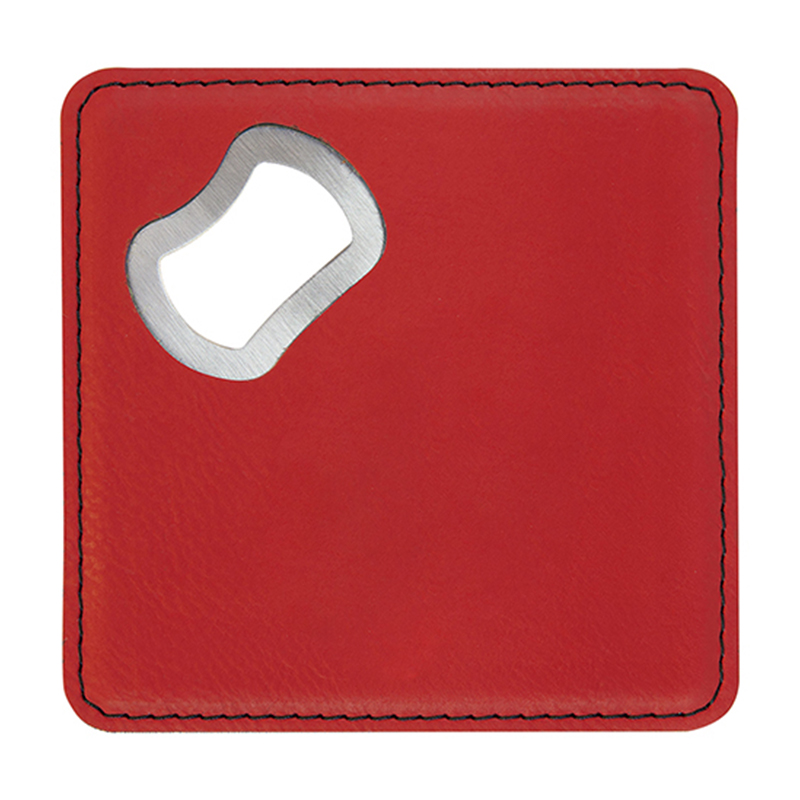 Square Laserable Leatherette Bottle Opener CoasterFunctional coaster with built-in bottle opener, ideal for bars, kitchens, or events. Its smooth leatherette surface takes detailed laser engraving for unique branded gifts or promotional items.View Product →
What to Check Before You Place an Order
Buying laserable leatherette is not the same as buying decorative faux leather. Because consistency and safety depend on how well the coating is engineered, the supplier's manufacturing capability matters as much as the price.
- Confirm the product is explicitly marketed as laserable leatherette, not just "faux leather" or "PU leather".
- Ask about the layer structure and thickness; 1.8mm is a common standard, but some uses need thinner or thicker stock.
- Check whether adhesive backing is available and which carrier liner is used.
- Test the same design across several colors before committing, since lighter and mid-tone shades show the engraved mark best.
- Request physical samples in the colors you intend to offer and run them through your own machine.
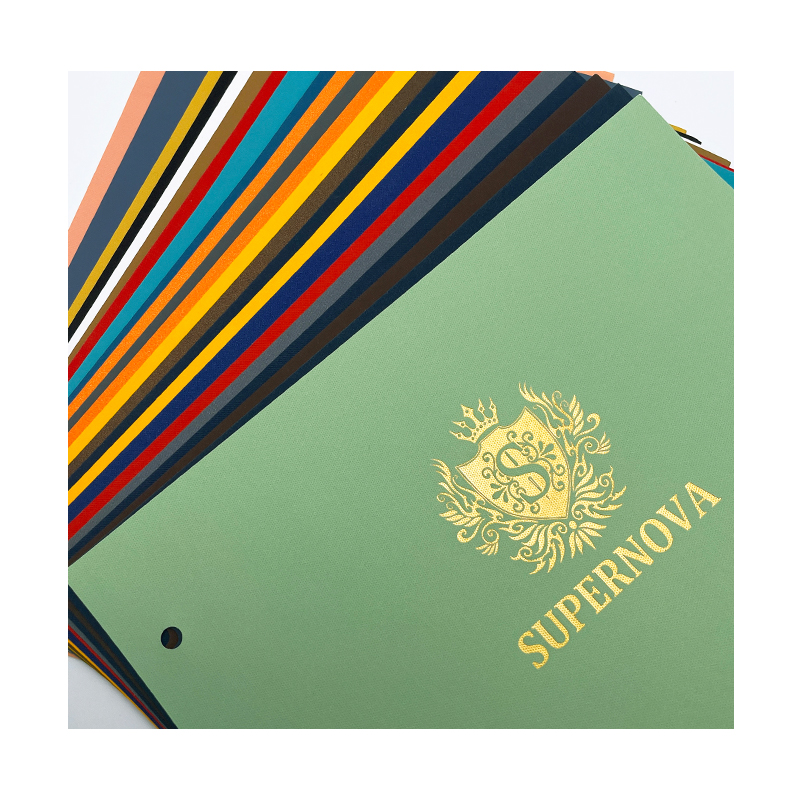
- Review the supplier's leatherette colour chart to see whether the available finishes match the market you serve.
- Ask about batch consistency and how the manufacturer controls quality across production runs.
Laser type note: laserable leatherette is formulated for CO2 laser systems, the most common type used in engraving workshops. If you run a diode laser, test carefully: the different wavelength can require higher power or multiple passes, and results vary more between colors.
The Bottom Line
So, can faux leather be laser engraved? Yes. Should you engrave any faux leather you happen to find? No. The difference between a profitable product line and an afternoon of ruined blanks comes down to the material you place on the laser bed.
Laserable leatherette gives you the consistency, contrast, and durability your customers expect. It is manufactured in sheet stock, patches, and finished blanks, so you can adopt it at whatever stage fits your workflow. When the material is purpose-built for the process, the laser does its job, and the finished products carry a quality that speaks for itself.
PREV: Laser Engraver for Leather Patches: Machine Buying, Settings, and Blanks
NEXT: Sublimation Keychain Materials: Choosing Blanks for Durable, Vibrant Keychains
Contact Us
Your email address will not be published. Required field are marked*
Blog
-
-
Why Choose Laser Engraved Leather Patches for High-Quality Custom Designs? When it comes to custom designs for fashion, branding, and accessories, the materials you choose play a c...
Read More -
Introduction to Laserable Leatherette What Is Laserable Leatherette? Laserable leatherette refers to a type of leatherette material engineered to respond well to laser processing, ...
Read More -
Unveiling the World of Leatherette Coasters: Beyond Basic Tableware Defining the Coaster: An Essential Home Accessory Before delving into the unique advantages of Leatherette Coast...
Read More

-
86-15851089634

-
[email protected]

-
Room 3110, Building 6, Jinrongcheng,5 Shiji Avenue, Yandu District,Yancheng City, Jiangsu Province, China

-
109#, Team 1, Longnian, Nanyang, Tinghu, Yancheng, Jiangsu, China, Zip code: 224000
- QUICK LINKS

