
 English
  Español
  Deutsch
Introduction of Leatherette Pet Collars Briefly introduce leatherette pet collars and their growing popularity. Leatherette pet collars have emerged as a dominant force in the pet ...
Read More
How does the color retention of engraved Laserable Faux Leather compare to screen-printed faux leather over time?
2026-05-12When it comes to long-term color retention, engraved Laserable Faux Leather significantly outperforms screen-printed faux leather. While screen printing applies ink or pigment on top of the material's surface, laser engraving permanently alters the material itself — removing or oxidizing the top layer to reveal a contrasting tone beneath. This fundamental difference means that engraved results do not fade, peel, or crack the way printed surfaces do. For businesses and makers producing laser leather patches, branded goods, or personalized accessories, this distinction has real consequences for product longevity and customer satisfaction.
Why the Marking Method Determines Color Durability
Screen printing deposits layers of ink onto the faux leather surface. Over time, these ink layers are vulnerable to UV exposure, abrasion, moisture, and repeated flexing — all of which cause the print to crack, fade, or peel. Studies on printed textiles and synthetic leather goods show that screen-printed surfaces can begin showing visible fading after as few as 20 to 30 wash cycles, and color degradation under UV light can begin within 6 months of outdoor exposure.
Laser engraving, by contrast, creates a permanent physical change in the material. When a CO₂ or diode laser interacts with laser leatherette, it vaporizes or chars the surface coating at precise points, producing a high-contrast mark that is part of the material — not sitting on top of it. There is no ink to wash away, no coating to peel, and no pigment to fade under UV rays.
Head-to-Head Comparison: Engraved vs Screen-Printed Faux Leather
| Performance Factor | Engraved Laserable Faux Leather | Screen-Printed Faux Leather |
|---|---|---|
| UV Resistance | Excellent — no pigment to degrade | Moderate — ink fades with UV exposure |
| Wash Durability | Very high — unaffected by washing | Degrades after 20–50 wash cycles |
| Abrasion Resistance | High — mark is embedded in material | Low to moderate — ink wears off |
| Color Consistency Over Time | Stable — no color shift | Variable — fades or yellows over time |
| Flex/Cracking Resistance | Excellent — no surface layer to crack | Poor — ink cracks with repeated flexing |
| Initial Color Vibrancy | Moderate — limited to contrast tones | High — full-color CMYK possible |
The Specific Advantage of Laser Leatherette for Longevity
Laser leatherette is specifically engineered with a top coating that reacts predictably and cleanly to laser energy. Unlike standard faux leather — which may bubble, discolor unevenly, or release harmful fumes — laser leatherette produces a crisp, high-contrast engraving with a consistent finish every time. This controlled reaction is also what makes the engraved area so durable: the surface material is physically altered, not coated.
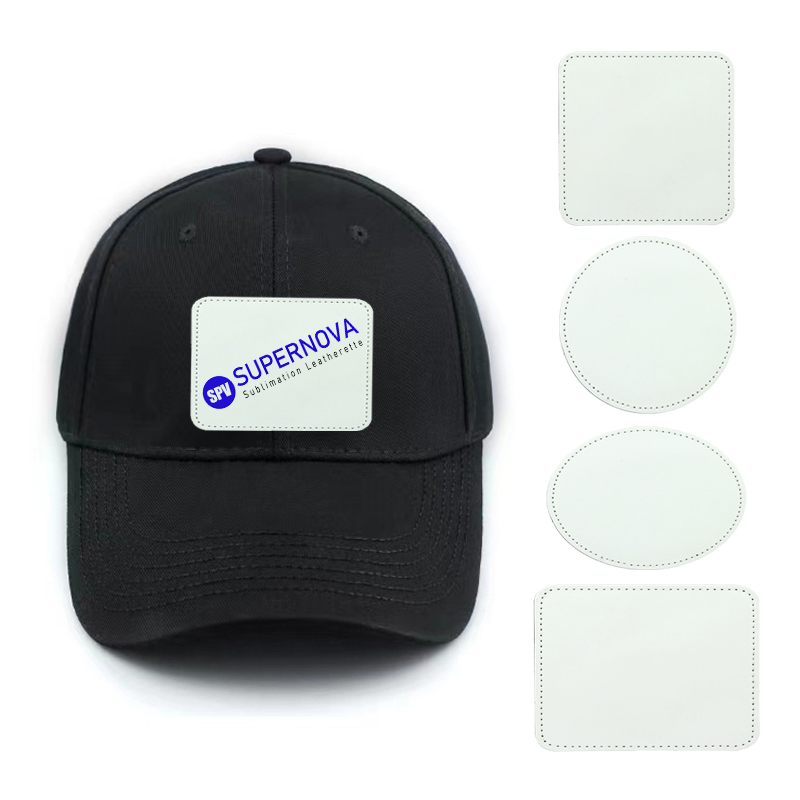
For applications like custom apparel labels, bag branding, and laser leather patches on denim or workwear, this durability translates directly into product quality. A screen-printed patch on a work jacket may look sharp on day one, but after a season of heavy use and regular washing, the graphic becomes illegible. An engraved laser leatherette patch on the same jacket will look virtually identical years later.
Where Screen Printing Still Has an Edge
It is important to acknowledge that screen printing is not without its strengths. In terms of initial visual impact, screen printing allows for full-color, photorealistic designs with vibrant hues that laser engraving simply cannot replicate. Laser engraving on faux leather is essentially limited to a two-tone result — the base material color and the engraved contrast color (typically dark brown, beige, or black depending on the material).
Screen printing is also faster for very large batch production runs when a single static design is being applied repeatedly to many units. However, once the cost of ink degradation, reprints, and returns due to peeling is factored in over a product's lifespan, engraved laserable leatherette often proves to be more cost-effective in the medium to long term.
Real-World Use Cases That Highlight the Difference
Custom Apparel and Workwear Patches
Brands producing premium denim, outdoor gear, or uniforms frequently use laser leather patches as an upscale alternative to woven or printed labels. In this context, the engraved mark must survive industrial laundering, friction, and UV exposure. Engraved laserable faux leather consistently meets these demands; screen-printed versions typically do not survive more than one season without visible degradation.
Promotional and Branded Merchandise
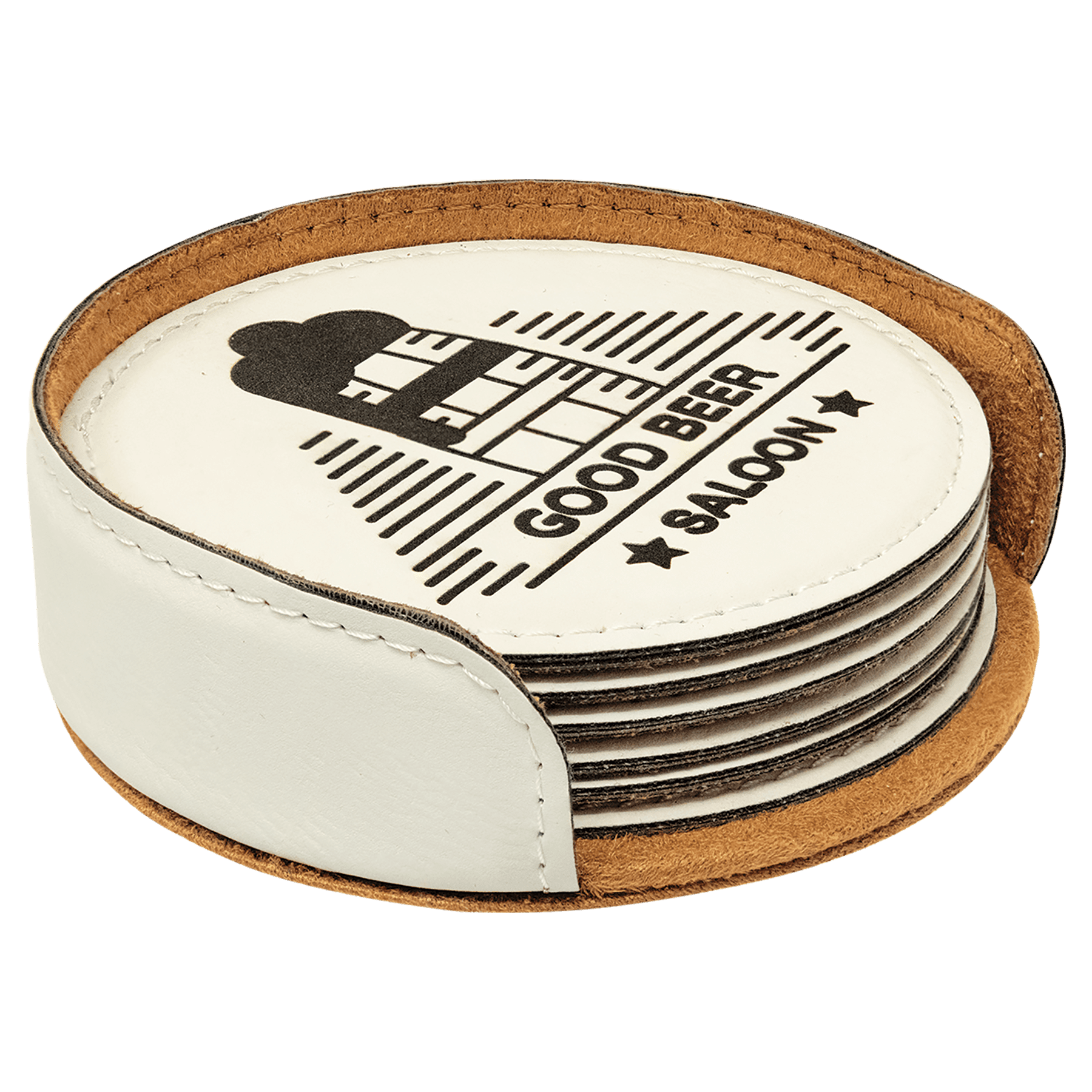
Corporate gifts such as engraved notebooks, wallets, keychains, and coasters often use laser leatherette as a premium surface material. In this segment, perceived quality is everything. A screen-printed logo that begins to crack or fade after a few months of desk use reflects poorly on the brand. An engraved design on laserable faux leather remains sharp and professional indefinitely.
Handmade and Small-Batch Goods
Independent makers who produce handcrafted bags, journals, or accessories rely heavily on laserable leatherette because it allows small-batch, on-demand customization without minimum order requirements or screen setup fees. The resulting product is both more personalized and more durable than a screen-printed equivalent — a significant competitive advantage in the craft and Etsy marketplace segment.
Key Factors That Affect Engraving Color Retention on Laserable Faux Leather
While engraved Laserable Faux Leather is inherently more durable than screen-printed alternatives, the quality of the engraving itself still depends on several controllable variables:
- Laser power and speed settings: Incorrect settings can under-engrave (resulting in a shallow, weak mark) or over-engrave (burning through the material entirely). Optimal settings for most laser leatherette materials fall between 30–60% power on a 40W CO₂ laser at 300–400 mm/s.
- Material quality: Not all laserable faux leather is created equal. Premium laser leatherette products are formulated with a consistent coating thickness and controlled reaction layer, producing sharper, more durable engravings than generic alternatives.
- Post-engraving cleaning: Residue from the engraving process can sit in engraved channels and affect the visual contrast. Cleaning with a soft cloth or mild air pressure immediately after engraving ensures the full depth and contrast of the mark is visible and stable.
- Storage and application environment: Even though engraved marks are highly stable, the faux leather base material itself can be affected by extreme heat or chemical exposure. Keeping finished goods away from harsh solvents preserves both the engraving and the surrounding material.
For any application where long-term color retention, durability, and professional appearance are priorities, engraved Laserable Faux Leather is the clear winner over screen-printed faux leather. The engraved mark is permanent, abrasion-resistant, wash-safe, and UV-stable in a way that no ink-based process can match.
Screen printing remains a valid option only when full-color output is non-negotiable and the product's lifespan or usage intensity is relatively low. For premium branding, durable patches, and personalized goods — particularly those made using laser leatherette or ordered as laser leather patches — laser engraving delivers a result that screen printing simply cannot sustain over time.
The bottom line: choose laser engraving when the design needs to last as long as the product itself.
PREV: How do Leather Blanks with a natural finish compare to pre-treated or coated Leather Blanks when used for laser engraving or heat embossing?
NEXT: How do sublimation coasters compare to laser-engraved coasters in print quality?
Contact Us
Your email address will not be published. Required field are marked*
Blog
-
-
Why Choose Laser Engraved Leather Patches for High-Quality Custom Designs? When it comes to custom designs for fashion, branding, and accessories, the materials you choose play a c...
Read More -
Introduction to Laserable Leatherette What Is Laserable Leatherette? Laserable leatherette refers to a type of leatherette material engineered to respond well to laser processing, ...
Read More -
Unveiling the World of Leatherette Coasters: Beyond Basic Tableware Defining the Coaster: An Essential Home Accessory Before delving into the unique advantages of Leatherette Coast...
Read More

-
86-15851089634

-
[email protected]

-
Room 3110, Building 6, Jinrongcheng,5 Shiji Avenue, Yandu District,Yancheng City, Jiangsu Province, China

-
109#, Team 1, Longnian, Nanyang, Tinghu, Yancheng, Jiangsu, China, Zip code: 224000
- QUICK LINKS

